AustinIO > Austin Strategic CapEx Nexus > Federal Strategic Capital to Austin
Federal Strategic Capital to Austin
Federal strategic capital is the largest single-source contribution to the Austin regional industrial buildout in dollar terms. The capital flows through six primary federal program offices: the Department of Commerce CHIPS Program Office (manufacturing incentive grants and loans), the Defense Advanced Research Projects Agency (DARPA, prototyping and fabrication research programs), the National Science Foundation (NSF, basic and applied research grants), the Department of Defense (DOD, applied research and procurement contracts), the Department of Energy (DOE, energy and materials research), and the National Aeronautics and Space Administration (NASA, aerospace and human spaceflight contracts). Federal capital does not operate in isolation; CHIPS Act site selection is conditioned on demonstrated state and local capital coordination, and DARPA program awards typically require state matching investment and academic-industry consortium structure. The conditioning of federal capital on state and local match is what makes federal strategic capital part of the coordinated regional buildout rather than an isolated funding stream.
This page documents the federal capital sources and their specific Austin-region deployments through 2026. The largest commitments include the $4.745 billion CHIPS Act award to Samsung Austin Semiconductor for the Taylor expansion, the $840 million DARPA Next Generation Microelectronics Manufacturing (NGMM) award to UT Austin's Texas Institute for Electronics, the $457 million NSF leadership-class computing facility grant supporting the Horizon supercomputer at UT's Texas Advanced Computing Center, the $176.4 million in cumulative annual NSF research expenditures at UT Austin (#1 nationally in fiscal year 2024), and the $4 billion-plus in NASA Human Landing System contracts to SpaceX (with Texas operations primarily at Starbase in Cameron County, plus regional R&D and supply chain integration).
CHIPS Act: The Largest Single-Program Federal Commitment
The Creating Helpful Incentives to Produce Semiconductors and Science Act, signed into law by President Biden on August 9, 2022, appropriated approximately $52.7 billion in semiconductor and research funding plus authorization for up to $75 billion in direct loans and loan guarantees. The $39 billion in manufacturing incentive grants is administered through the Department of Commerce's CHIPS Program Office, which sits within the National Institute of Standards and Technology (NIST). Through July 2025, Commerce had awarded $30.9 billion across 40 projects nationally per the U.S. Government Accountability Office, with companies expected to complete projects by 2033.
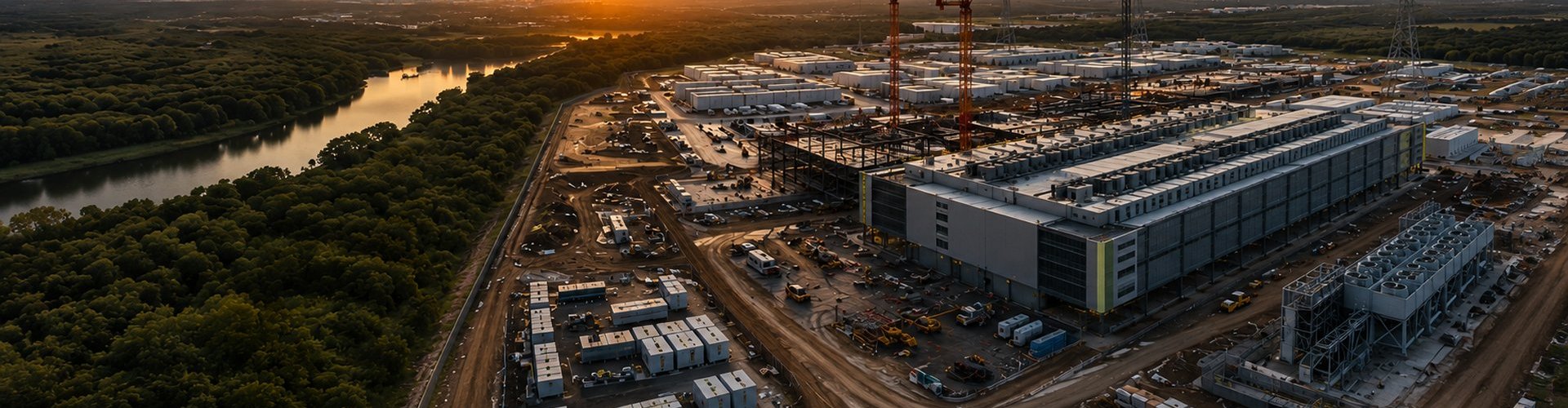
The Samsung Austin Semiconductor award is the largest single CHIPS Act commitment in the Austin region and one of the largest globally. The Department of Commerce awarded Samsung up to $4.745 billion in direct funding under the CHIPS and Science Act to support a comprehensive advanced manufacturing ecosystem at the Taylor campus including two leading-edge logic foundry fabs focused on mass production of 2-nanometer process technologies, an R&D fab dedicated to research and development of manufacturing process nodes several generations ahead of current production, and an expansion of the existing Austin facility. Samsung is expected to invest more than $37 billion in the region in the coming years (with current 2026 reporting indicating the total has grown to approximately $44 billion as the project has expanded). The investment supports the creation of more than 15,000 jobs at full buildout. In 2024 alone, construction activity at the Taylor site injected $8.6 billion into the local economy and supported 8,868 direct and 9,768 indirect construction jobs. The City of Taylor collected $21.6 million in sales tax in fiscal year 2023-2024 from the construction activity.
Samsung's CHIPS Act award is paired with $250 million from the Texas Semiconductor Innovation Fund (announced September 2025) and Williamson County and City of Taylor Chapter 380 incentive agreements. The federal-state-local coordination at Samsung Taylor is the marquee illustration of the federal-anchor-with-state-match pattern documented in Public-Private Coordination Patterns. The Taylor semiconductor expansion represents the single largest foreign direct investment in Texas history.
CHIPS Act Status Under the Trump Administration
The federal CHIPS Act faced a period of uncertainty under the Trump administration in early 2025. President Trump in his March 4, 2025 Joint Address to Congress directly criticized the CHIPS Act and called for its repeal, saying the law was "horrible" and recommending that any remaining funding be used to reduce debt. Commerce Secretary Howard Lutnick confirmed in February 2025 that the administration was renegotiating Biden-era CHIPS Act grants with several recipients, with possible delays to approaching disbursements. In August 2025, the administration moved to close Natcast (the National Semiconductor Technology Center operating company) and cut off most of its funding. Through August 2025, only $2.2 billion of Intel's announced $7.9 billion CHIPS Act grant had actually been disbursed, illustrating broader pace-of-disbursement issues across the program.
However, by October 2025 the administration had preserved the CHIPS Act rather than repealing it. The administration added an additional 10 percentage points to the advanced semiconductor manufacturing tax credit (Section 48D), strengthening the tax-credit incentive layer of the CHIPS framework. The Trump administration's policy direction shifted from outright repeal toward renegotiation and restructuring of individual awards, with emphasis on removing Biden-era provisions related to diversity, equity, inclusion, and certain social-policy conditions (such as childcare access plans) that had been embedded in the award contracts. The Samsung Austin Semiconductor award has not been reported as disrupted by the renegotiation activity through 2026 reporting, with the project continuing to ramp construction toward production targeted for late 2026 to 2027.
The honest reading is that the federal CHIPS Act remains the anchor federal commitment in the Austin region, but the disbursement pace and grant-by-grant terms remain subject to administrative discretion under the current administration. The capital coordination structure that the original CHIPS Act enabled at Samsung Taylor and other Austin-region recipients continues to operate, but with elevated operational uncertainty around future federal awards and the timing of approved grant disbursements.
DARPA NGMM: The Defense Microelectronics Anchor
The Defense Advanced Research Projects Agency awarded $840 million to UT Austin's Texas Institute for Electronics in July 2024 under the Next Generation Microelectronics Manufacturing (NGMM) program. The award is structured to establish a national open-access research and development and prototyping fabrication facility at UT Austin focused on 3D Heterogeneous Integration (3DHI), a semiconductor fabrication technology that integrates diverse materials and components into microsystems using precision assembly technologies. The 3DHI capability targets defense applications including radar, satellite imaging, unmanned aerial vehicles, and other high-performance compact systems, plus dual-use applications across the broader semiconductor industry.
The DARPA NGMM award builds on the $552 million state appropriation to TIE from the Texas Legislature through the Texas CHIPS Act. The combined federal-plus-state investment of approximately $1.4 billion is what enabled TIE to assemble its industry-and-academic consortium of 32 defense electronics and leading commercial semiconductor companies plus 18 nationally recognized academic institutions. The TIE consortium operates approximately 84,000 square feet of state-of-the-art clean room space across UT facilities including the J.J. Pickle Research Campus and the Montopolis Drive semiconductor plant (originally home to Sematech). TIE is led by Principal Investigator S.V. Sreenivasan with John Schreck (former Senior Vice President at Micron) as CEO. The DARPA NGMM project is the largest single federal research commitment to the UT Austin research ecosystem in TIE's operational history.
NSF: The Basic Research and Computing Anchor
UT Austin ranks #1 nationally for research funded by the National Science Foundation in fiscal year 2024 per the NSF Higher Education Research and Development (HERD) Survey, with $176.4 million in NSF research expenditures. UT Austin had previously held the #1 NSF ranking in fiscal year 2020 and has consistently maintained top-10 NSF rankings over the past five years. More than 75% of externally funded research conducted at UT Austin is financed by federal agencies. The NSF allocation to UT Austin is concentrated in computer and information sciences ($90 million in 2024), geosciences (~$12 million), life sciences (~$10 million), and physical sciences (~$10 million).
The largest 2024 NSF grant supporting UT Austin is the $457 million multi-year leadership-class computing facility grant supporting Horizon, the largest and most powerful academic supercomputer in the United States, under construction at the Texas Advanced Computing Center (TACC). UT Austin received $26 million of the $457 million grant in 2024, with the remainder distributed across the multi-year construction window. Horizon will have approximately ten times the computing power of Frontera, TACC's prior flagship supercomputer (which itself was the most powerful academic supercomputer in the United States during its operational period). The Horizon project is collaborating with Dell Technologies and NVIDIA on hardware integration, with NSF providing approximately 80 percent of TACC's overall facility funding per Daniel Stanzione, TACC's executive director. The facility is designed to be six times more energy efficient than other existing supercomputers.
The AI Institute for Foundations of Machine Learning (IFML) at UT Austin received a $20 million NSF renewal in 2025 (originally established by a 2020 NSF grant), making IFML one of only three NSF AI institutes nationwide selected for renewal to lead U.S. AI research. IFML is housed in UT's College of Natural Sciences and operates open-source AI infrastructure used by external organizations including Google. The Center for Dynamics and Control of Materials, also NSF-funded, accelerates materials science research for sustainable energy, quantum information processing, bioinspired systems, and semiconductors for telecommunications, computing, and sensing.
DOD and DOE: The Defense and Energy Research Layers
UT Austin ranks #5 nationally in research financed by the Department of Defense and #6 nationally in research financed by the Department of Energy per the FY2024 HERD Survey. The DOD funding supports the Cockrell School of Engineering's defense research portfolio, including Texas Robotics work on autonomous navigation in collaboration with the U.S. Army for search-and-rescue, mine-clearing, and firefighting applications. The DOE funding supports the Jackson School of Geosciences, the Department of Energy's national laboratory partnerships, and energy materials research at the Cockrell School. Specific recent DOE-funded research includes Peter Flemings's expedition to collect core samples of methane hydrate beneath the Gulf of Mexico seafloor.
The DOD and DOE funding structures complement the larger DARPA NGMM commitment to TIE. The aggregate federal defense-and-energy research base at UT Austin is among the largest of any U.S. research university, and the consistent top-10 ranking position over multiple years reflects the institutional depth that supports new program awards as federal priorities evolve. The 2025 federal funding adjustments (discussed below) affected some DOD and DOE programs at UT Austin, but the core ranking position has been maintained through the adjustment period.
NASA: SpaceX Human Landing System Contracts
NASA's largest commitment to a Texas-based contractor is the Human Landing System (HLS) contract series with SpaceX. The original Option A contract awarded April 16, 2021 was valued at $2.89 billion for the Starship HLS lunar lander supporting the Artemis program, including an uncrewed demonstration mission and the first crewed lunar landing under Artemis III. NASA awarded SpaceX a $1.15 billion Option B contract modification in November 2022 to develop and demonstrate an upgraded Starship lunar lander for Artemis IV and beyond, including capability for docking with the lunar Gateway and accommodating four crew members. The combined HLS contracts to SpaceX total approximately $4 billion through 2026. SpaceX is also a beneficiary of NASA's parallel commercial launch services contracts and crew transportation contracts, plus NASA-coordinated DOD and Space Force programs.
The geographic distinction matters. SpaceX's Starship development and launch operations are primarily based at Starbase in Cameron County (Brownsville area), not in the Austin metro. The Austin-region SpaceX presence centers on the Bastrop County facilities adjacent to the Musk industrial cluster (X, Boring Company, SpaceX-adjacent operations). The federal capital flowing to SpaceX through NASA contracts therefore lands primarily in Cameron County rather than Austin metro counties. The Austin-region capital exposure to NASA-SpaceX flows operates through the Bastrop industrial cluster, the regional R&D and supply chain integration with Texas-based suppliers, and through the broader Texas-wide aerospace economy.
Beyond SpaceX, NASA contracts to other Austin-region recipients include the $17.3 million Texas Semiconductor Innovation Fund award to SpaceX (which is a state award triggered by federal program coordination, listed in the federal-plus-state semiconductor table), plus smaller research grants to UT Austin and other Austin-region institutions through NASA's research and education programs.
Federal-Plus-State Stack Coverage Across Austin-Region Recipients
The complete picture of federal capital flowing to Austin-region recipients aggregates approximately $5.6 billion-plus in federal commitments across the 2022-2026 coordination phase, paired with approximately $870 million-plus in state commitments. The recipient distribution covers the complete semiconductor stack from leading-edge fabrication through workforce development, plus adjacent capital flows into AI research infrastructure, defense electronics, energy research, and aerospace operations. The aggregate-with-composition picture is documented in the parent Austin Strategic Capital Nexus page; the recipient-by-recipient federal-plus-state allocation table is reproduced there with stack-layer addressed for each recipient.
The composition matters more than the aggregate. The federal capital is being deployed across leading-edge fabrication (Samsung Taylor), advanced-node prototyping (TIE), specialty devices (Silicon Labs supplemental), aerospace-grade semiconductors (SpaceX coordinated state award), photomask supply (federal awareness of Tekscend's specialty role), specialty materials (Coherent), workforce training (CHIPS Act workforce coordination at ACC), basic research (NSF at UT Austin), AI infrastructure (NSF Horizon and IFML), defense research (DOD at UT Austin), energy research (DOE at UT Austin), and aerospace (NASA at SpaceX). The deliberate completeness of stack coverage is what distinguishes the coordinated buildout from an accumulation of independent commitments.
Why the Federal Layer is Necessary But Not Sufficient
Federal strategic capital is the largest single-source layer of the Austin regional buildout in dollar terms, but it is structurally insufficient on its own. CHIPS Act funding requires complementary state incentive capital and municipal infrastructure capital before a fab project becomes operational; the federal program design explicitly conditions site selection on demonstrated state and local support, and most CHIPS Act awards are paired with state CHIPS Act, Texas Enterprise Fund, or county-and-municipal Chapter 380 commitments. DARPA program awards require state matching investment and consortium-structure organization before federal capital can flow into a research facility; TIE's $552 million state appropriation preceded and enabled the $840 million DARPA NGMM award rather than the reverse. NSF research funding supports basic research that requires institutional infrastructure (clean rooms, supercomputers, faculty positions) that requires complementary state, institutional, and private capital to construct and operate. NASA contracts to SpaceX support development of Starship that requires substantial private capital (Starlink revenues, equity raises, $4 million per day burn rate at peak) to operate at the deployment scale that the federal contracts envision.
The structural insufficiency of federal capital alone is what makes the coordination structure necessary. The federal layer anchors site selection decisions and program scale, but the coordination across federal, state, county, municipal, and private capital layers is what enables outcomes that none of the individual layers could produce alone. The Texas State Strategic Capital, County & Municipal Capital, Strategic Private Capital, and Supply Chain Capital Investment child pages document the complementary capital layers that operate alongside federal strategic capital in the Austin coordination structure.
Related Coverage: Texas State Strategic Capital to Austin | County and Municipal Strategic Capital to Austin | Austin Region Strategic Private Capital | Austin Region Supply Chain Capital Investment | UT Austin TIE NGMM Center | Samsung Taylor Fab