AustinIO > The Texas Nexus > Texas Panhandle Nexus
Texas Panhandle Nexus
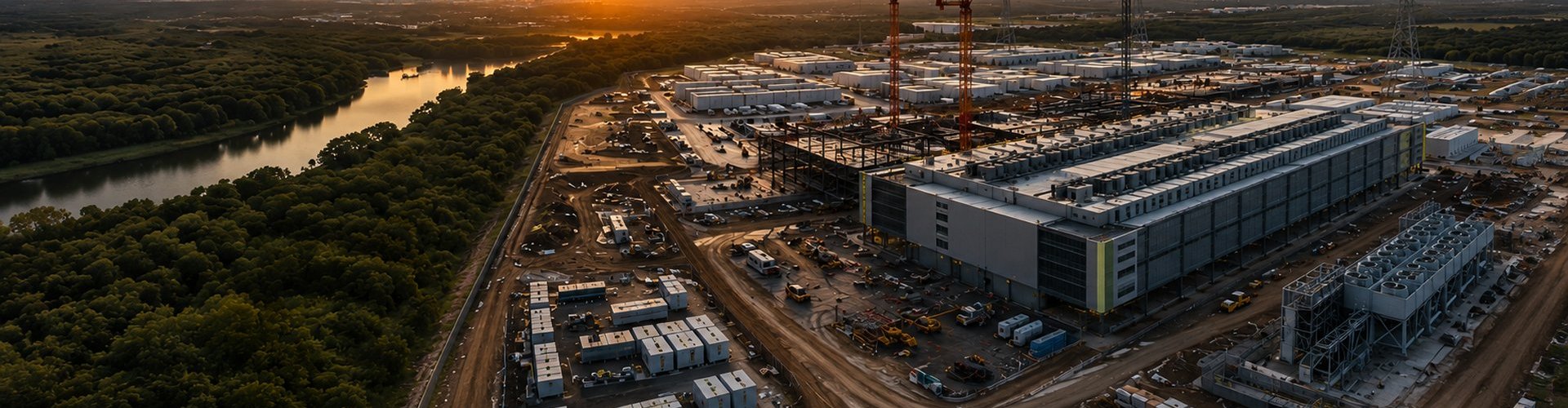
The Texas Panhandle is the state's emerging nuclear-and-AI concentration. The region holds a distinctive combination of land availability, gas and wind generation substrate, low population density, federal nuclear-weapons-facility adjacency, and a research-university substrate at Texas Tech that together make it the natural site for the most ambitious coupled energy-and-AI infrastructure project in Texas. Project Matador, anchored by Fermi America at Carson County, is the lead anchor; Pantex Plant at Amarillo provides federal strategic-infrastructure adjacency; Texas Tech University System at Lubbock provides the workforce and research backbone. The concentration is at an earlier development phase than the Texas Triangle but has structural advantages that the Triangle's denser metros cannot replicate.
What makes the Panhandle distinctive at the Texas Nexus level is the federally-coordinated nuclear-and-AI architecture. Most US datacenter buildouts are grid-tied and rely on existing or new utility-scale generation. Project Matador is greenfield-coupled — the AP1000 reactors and supporting gas turbines, solar, and BESS are designed as integrated infrastructure with the AI compute campus rather than supplied from external grid. The architectural premise has no full-scale operational precedent in the United States. Whether it succeeds at the projected scale is one of the major open questions in the AI-Industrial trajectory through the 2030 window.
The Anchors
| Anchor | Operator | Role |
|---|---|---|
| Project Matador / Fermi America | Fermi America | First nuclear-and-datacenter coupled hyperscale anchor in the US; Carson County campus integrating AP1000 ×4 + gas turbines + solar + BESS + on-site datacenter; Phase 1 (1 GW gas + solar) operational late 2026, first nuclear reactor 2031-2032 |
| Pantex Plant | National Nuclear Security Administration (DOE) | Primary US nuclear weapons assembly, disassembly, and stockpile stewardship facility; Amarillo adjacency to Project Matador provides federal strategic-infrastructure overlay and workforce continuity |
| Texas Tech University System | State of Texas | Research and workforce substrate at Lubbock; Texas Tech is land partner for Project Matador campus; engineering, agricultural sciences, and emerging research programs feed regional industrial buildout |
| Xcel Energy / Southwestern Public Service | Xcel Energy | Regional grid operator providing interconnect at Amarillo; structurally tied to Project Matador's grid-export capability and to broader Panhandle wind generation |
Why the Panhandle
The structural reasons the Panhandle is the right region for Project Matador and adjacent buildout reduce to four. Land availability at scales that the Texas Triangle metros cannot match — Carson County's population density makes 5,000+ acre greenfield sites feasible without displacement pressure. Generation substrate combining the largest US wind concentration (Panhandle wind has been the foundational anchor of ERCOT renewable capacity for two decades) with abundant gas (Permian Basin gas pipeline access via established trunk infrastructure) and nuclear regulatory feasibility (NRC permitting at Amarillo benefits from existing federal nuclear adjacency at Pantex). Workforce continuity from Pantex and from Texas Tech engineering pipeline. Federal strategic-infrastructure environment that DOE coordination and the broader national security context make easier in the Panhandle than in metro-pressure regions.
The Panhandle also operates outside the water-stress envelope that constrains Triangle metros. Project Matador is engineered for closed-loop cooling architectures that minimize Ogallala Aquifer demand; the design choice was forced by the Panhandle's water reality but produces a generally water-efficient AI compute architecture that has cross-application relevance. The water constraint shaped the design; the design is now an asset.
Prospective Corridor Emergence
The Panhandle is currently a single-anchor concentration. Whether a corridor identity emerges depends on additional anchor commitments over the next 5-10 years. The most plausible corridor is along Interstate 27 connecting Amarillo and Lubbock, roughly 120 miles, integrating Project Matador's energy-and-AI architecture with Texas Tech's research substrate and any prospective additional anchors in the region. Conditions that would crystallize a corridor identity include additional hyperscaler or AI compute commitments at Amarillo or Lubbock, additional nuclear capacity beyond Project Matador, or significant supplier-ring formation around Project Matador's construction phase.
Currently the corridor is potential rather than actual. The concentration page treats it as such; if and when corridor-defining commitments materialize, a dedicated corridor page becomes appropriate.
Related Coverage
Trans-Pecos & West Texas Nexus | Why Texas: The Logic of AI-Industrial Concentration | Texas Triangle Cluster | Brazos Valley Semiconductor Concentration | Fermi America — Project Matador | Meitner Energy Center