AustinIO > The Texas Nexus > Gulf Coast Nexus > Tesla Robstown Lithium Refinery
Tesla Robstown Lithium Refinery
First US-Scale Battery Materials Anchor
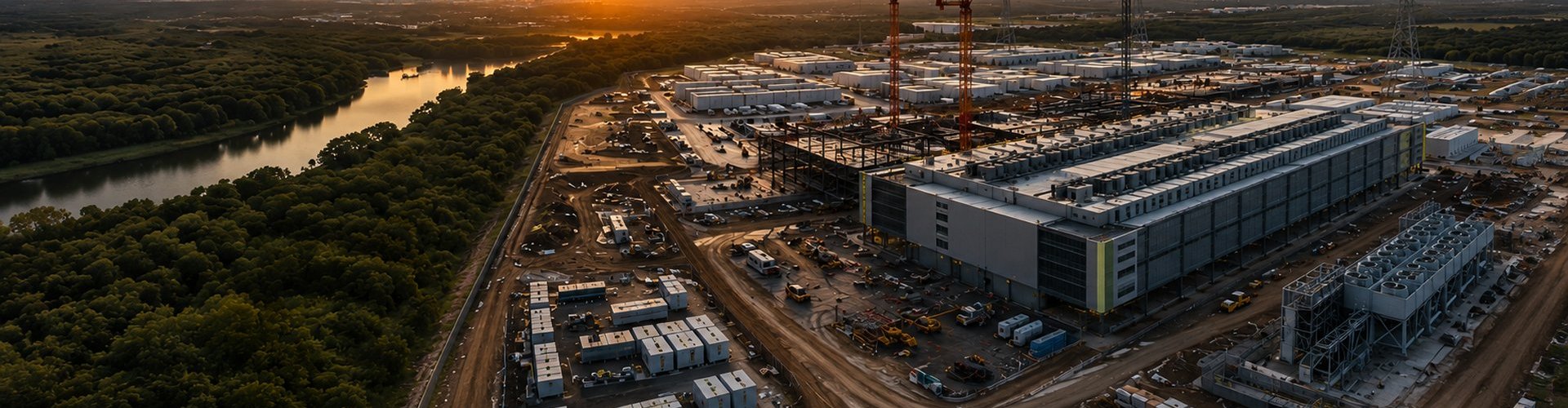
Tesla's Robstown Lithium Refinery Gigafactory in Nueces County is the first major US-scale lithium refinery and Tesla's vertical integration into raw battery materials. The Corpus Christi-area facility refines spodumene concentrate into battery-grade lithium hydroxide and produces cathode active material precursor (CAM precursor) on the same campus, feeding Tesla's 4680 cell production line at Giga Texas and supporting the broader Tesla Texas vertical stack. The refinery commissioned its first stages in 2025 and is ramping toward full production capacity through 2026-2027, anchoring the Robstown Lithium Cluster as one of the five operationally-distinctive industrial clusters in the AustinIO dataset family.
What distinguishes the Robstown facility at the Texas Nexus level is the combination of three structural firsts. It is the first US lithium refinery operating at the volumes required to meaningfully reduce US dependence on Chinese refined-lithium supply, which has been the most concentrated chokepoint in the lithium-ion battery supply chain for over a decade. It is the first commercial deployment of Tesla's sulfate-free refining process, which uses less corrosive chemistry than the conventional sulfuric-acid roast process and produces fewer hazardous byproducts. It is the first vertical integration of CAM precursor production with lithium refining at one campus, eliminating the intermediate transportation and packaging steps that conventional supply chains require between refinery and cathode operator.
The Robstown Lithium Cluster
The Robstown Lithium Cluster is the operational integration of multiple co-located facilities at and around the Tesla campus. Tesla operates the lithium refinery and the CAM precursor plant in-house. Port of Corpus Christi handles the inbound spodumene concentrate import from Australian, Canadian, and African sources. AEP Texas operates the regional grid interconnect; Tesla maintains on-site Megapack storage for behind-the-meter resilience. Texas A&M University-Corpus Christi provides the workforce and chemical-engineering pipeline for the refinery's specialized operations. Together these facilities form a chemical-process-plant complex with port and transportation linkage that has no operational analog in the United States; the cluster is structurally similar to the Houston Ship Channel petrochemical operations in its co-located-process-plant character, but at battery materials specialty rather than at hydrocarbon scale.
The cluster's geographic footprint is concentrated in Nueces County with its primary external connection running through the Port of Corpus Christi for spodumene import. Outbound lithium hydroxide and CAM precursor flow inland to Tesla Giga Texas via rail and truck, integrating the cluster operationally with the Tesla vertical stack across multiple Texas counties. The Gulf Coast concentration page covers the broader regional context within which the Robstown Lithium Cluster sits.
Cross-Anchor Position
Robstown's most operationally significant cross-anchor relationship is with Tesla Giga Texas. Lithium hydroxide refined at Robstown flows directly to Giga Texas's 4680 cell line; CAM precursor produced at Robstown flows to the Giga Texas cathode operations. The Giga Texas Cluster and the Robstown Lithium Cluster are operationally interdependent — Robstown's existence is justified by Giga Texas's demand, and Giga Texas's vertical-integration thesis depends on Robstown's supply. The two clusters together form the spine of Tesla's battery-materials-to-cell-to-vehicle vertical integration on Texas soil.
Tesla's broader Texas footprint connects Robstown to additional operations. The Brookshire Megapack Factory in Waller County consumes cells produced from Robstown-refined materials in its Megapack and Megablock energy-storage products. SpaceX Starbase consumes Tesla-produced energy storage (Megapack at Boca Chica) for behind-the-meter resilience, indirectly tying Robstown's refining output to SpaceX's launch and integration operations. The full Tesla Texas vertical stack — from spodumene import at Corpus Christi through refining at Robstown through cell production at Giga Texas through vehicle and Megapack assembly at Giga Texas and Brookshire — runs through the state without leaving it at any production stage.
Why Robstown
Tesla selected Robstown because of three structural fits. Port of Corpus Christi provides the second-largest US energy export port and substantial bulk-cargo capacity that absorbs spodumene import volumes without competing for slot capacity with the higher-priority crude oil and LNG export traffic concentrated upstream at the channel. Gulf Coast chemical processing infrastructure, regulatory environment, and workforce — the broader Texas chemical industry has a century of operational experience with corrosive industrial chemistry, providing trained personnel and contracting capacity that Tesla's refinery operations rely on. Land availability and Texas state-level incentive structures that the regulatory environment provides for industrial expansion at Tesla's scale.
The selection also reflects strategic distance from the Texas Triangle's water-stressed metros. Lithium refining is water-intensive, but Nueces County's surface water access through the Nueces River and groundwater through the Gulf Coast Aquifer system is less constrained than Travis County's Edwards Aquifer-and-Colorado-River situation that Tesla Giga Texas operates within. Operating water-intensive chemical processing on the coast rather than in the metro reduces direct competition with metro-scale water demand growth.
Suppliers and Co-Located Infrastructure
| Supplier | Proximity |
|---|---|
| AEP Texas Robstown Grid Service | local |
| Air Liquide Industrial Gas Texas | regional |
| Albemarle Kings Mountain Operations | domestic |
| Alkaline Scrubber Systems | domestic |
| Analcime Co-Product Offtake | regional |
| Andritz Process Equipment | global |
| Carolina Lithium Project | domestic |
| Caterpillar Backup Generators | domestic |
| Ecolab/Nalco Process Chemistry | domestic |
| Elevra Lithium (formerly Piedmont + Sayona) | global |
| Emerson Process Automation | domestic |
| Fives Group Process Equipment | global |
| FLSmidth Kiln Equipment | global |
| GEA Group Crystallization Equipment | global |
| Hitachi Energy Substation Equipment | global |
| Industrial Conveyance Systems | domestic |
| Industrial Filter and Membrane Systems | domestic |
| Industrial Pumps for Process Operations | regional |
| Limestone and Lime Supply | regional |
| Linde Industrial Gas Operations | regional |
| Liontown Resources Kathleen Valley | global |
| Metso (Outotec) Process Equipment | global |
| North American Lithium (NAL) Quebec Mine | global |
| Nueces County Water Control District | local |
| Pilbara Minerals Pilgangoora | global |
| Process Control and Automation Systems | regional |
| Quanta Services Substation Construction | regional |
| Recycled Battery Feedstock | domestic |
| Redwood Materials Recycling Operations | domestic |
| Regional Texas Industrial GCs | regional |
| Schneider Electric Power Distribution | domestic |
| Site Civil Construction | local |
| Specialty Steel for Process Equipment | domestic |
| SQM Salar de Atacama Operations | global |
| Tesla Megapack On-Site Storage | onsite |
| Tesla Robstown Alkaline Leach System | onsite |
| Tesla Robstown CAM Precursor Plant | onsite |
| Tesla Robstown Crystallization Plant | onsite |
| Tesla Robstown Kiln + Cooler System | onsite |
| Veolia Water Treatment Texas | regional |
Constraints and Considerations
Spodumene feedstock supply diversification is the most important strategic consideration for Robstown's continued scale-up. Australian operators (Greenbushes, Pilgangoora, Mount Marion) have been the dominant Western suppliers for years, but their output is increasingly contracted to Chinese refiners under multi-year arrangements. Tesla's Robstown operations require feedstock supply at scale outside those Chinese-tied contracts, which means accelerating Canadian and African source qualification and potentially direct Tesla equity participation in upstream mining operations. The vertical integration thesis depends on Tesla securing feedstock as well as operating the refinery; the refinery without secure feedstock becomes a stranded asset.
Process scale-up risk is also material. Sulfate-free refining is a less mature commercial process than conventional sulfuric-acid roast; Tesla is the first operator running it at Robstown's volumes. Yield, throughput, and product-quality consistency at full production capacity will be tested through 2026-2027. The structural advantages (less corrosive chemistry, fewer hazardous byproducts) are real but the operational learning curve is also real.
Watching Items
Tesla Robstown lithium hydroxide first commercial production at scale is the highest-impact pending milestone, validating or rebasing the sulfate-free process at production volumes. CAM precursor production scaling to support Tesla's 4680 cell line at full capacity is the second-most-critical milestone. Spodumene supply diversification announcements (Canadian operator equity participation, African source qualification, US domestic source development) shape the long-term feedstock security profile. Adjacent watching items include any Tesla announcement of additional refinery capacity (Robstown expansion or second-site siting), and any US federal critical-materials designation that would affect the refinery's strategic-infrastructure status.
Related Coverage
Tesla Giga Texas Complex | Tesla Megapack & Megablock at Brookshire