AustinIO > The Texas Nexus > Texas Triangle Cluster > Austin-Waco I-35/I-14 Corridor > SpaceX McGregor Engine Factory
SpaceX McGregor Engine Factory
Engine Production and Testing Anchor of the SpaceX Texas Vertical Stack
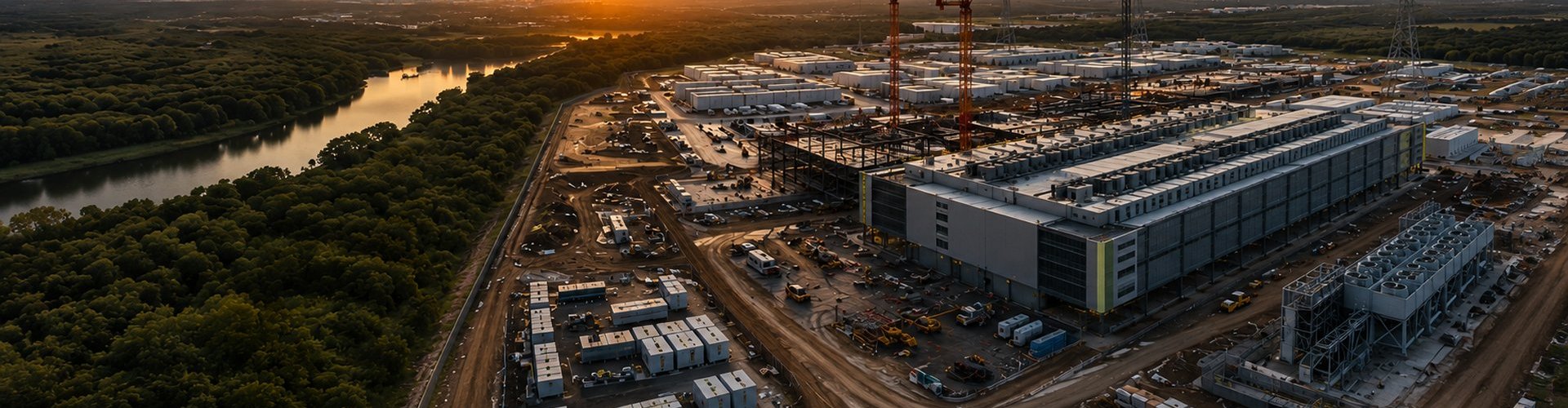
SpaceX McGregor in McLennan County is the engine production and testing anchor of the SpaceX Texas vertical stack. The 4,300-acre facility, located approximately 15 miles southwest of Waco, has been operated by SpaceX since 2003 and has evolved from a Merlin engine test site for the original Falcon 1 program into a multi-purpose engine factory, test stand complex, and propulsion development center. As of early 2026, Raptor 3 development and qualification, Merlin engine testing, and Falcon 9 second-stage testing are the most active operations on site, alongside high-volume Raptor 2 production at the second Raptor factory built out under the $150 million Phase I/II development agreement with the City of Waco.
What makes McGregor distinctive at the Texas Nexus level is the multi-program scope concentrated at one site. Most SpaceX operations specialize — Hawthorne handles design and Raptor Vacuum production, Starbase handles Starship integration and launch, Bastrop handles Starlink terminals and advanced packaging. McGregor handles engine production at scale plus engine testing across the Raptor and Merlin product lines plus Falcon 9 stage testing plus Dragon spacecraft refurbishment after splashdown recovery. The concentration of multiple operations at one site reflects the facility's history (originally World War II Bluebonnet Ordnance Plant, then Beal Aerospace through 2000, then SpaceX from 2003 forward) and the 4,300-acre footprint that supports operations no single-purpose site could accommodate.
Engine Production and the Second Factory
Raptor production at McGregor has scaled substantially since SpaceX announced the second Raptor factory in 2021. The original Raptor manufacturing was at Hawthorne; the McGregor expansion was structured to focus on volume production of Raptor 2 sea-level engines while California operations focused on Raptor Vacuum and experimental designs. Under the development agreement with the City of Waco, SpaceX committed approximately $150 million across two phases — $100 million in real and personal property improvements plus 250 jobs by mid-2025 (Phase I), then $50 million additional plus 150 more jobs by mid-2026 (Phase II). The factory is targeted at 800 to 1,000 Raptor engines per year at full output, which Musk described as "the highest output and most advanced rocket engine factory in the world" when announcing the expansion.
Raptor 3 is the current development focus. The third-generation engine targets approximately 280 to 300 metric tons of thrust at the booster/sea-level configuration, with structural improvements that integrate plumbing and sensors into the engine main body to eliminate protective shrouds. Raptor 3 ground testing has reached 280 metric tons at 350 bar chamber pressure in qualification testing, with operational pressure announced as high as 330 bar. The transition from Raptor 2 production to Raptor 3 production is the major operational evolution at McGregor through 2026-2027, with each generation of Raptor delivering substantially higher thrust at substantially lower production cost. Raptor 2 production cost was approximately half of Raptor 1 ($250,000 versus close to $1 million); Raptor 3 continues that cost-reduction trajectory through manufacturing simplification.
Test Stand Complex
McGregor's test stand complex is structurally separable from the engine factory and serves multiple programs simultaneously. The Raptor stands in the western portion of the complex include several horizontal test cells plus a converted vertical tripod stand originally built by Beal Aerospace in the late 1990s and reinforced in 2019 to handle Raptor's higher thrust-to-weight and chamber pressures. The Falcon 9 stage stands include a vertical stand for first-stage booster static fires plus a horizontal stand for second-stage testing. Every Falcon 9 and Falcon Heavy stage continues to pass through McGregor for testing before reaching the Florida or California launch pads — the testing operation has continued in parallel with Starship-program scaling, supporting SpaceX's commercial launch cadence on Falcon 9 alongside the development testing on Raptor.
Dragon spacecraft refurbishment is the third operational layer at McGregor. After splashdown and recovery, Dragon capsules are shipped to McGregor for de-fueling, cleanup, and refurbishment for potential reuse. The refurbishment operations support the Crew Dragon ISS rotation flights and the Cargo Dragon resupply missions that NASA contracts require. The multi-program scope means McGregor is not just an engine production site but the central testing-and-refurbishment hub for SpaceX's commercial launch services business alongside its Starship development pipeline.
Cross-Anchor Position
SpaceX McGregor is part of the Starbase Cluster — the integrated SpaceX Texas vertical stack spanning Cameron, McLennan, and Bastrop counties. McGregor's role in the cluster is engine production and testing; Starbase's role is integration and launch; Bastrop's role is satellite manufacturing and silicon advanced packaging. Engines produced at McGregor ship to Boca Chica for vehicle integration. Falcon 9 second stages tested at McGregor ship to launch sites in Florida and California. Workforce mobility across the three Texas SpaceX sites is real — engineers move between sites as program priorities shift; specialty trades accumulate across all three locations.
McGregor also sits within the Austin-Waco I-35 / I-14 Defense-Industrial Spine corridor, alongside the broader Texas defense-industrial concentration. The corridor includes Killeen-Fort Cavazos to the south of McGregor, with workforce pipeline through the Heroes MAKE America transitioning-soldier program providing technical and engineering workforce that McGregor's operations benefit from. Baylor University at Waco provides academic and research substrate. The corridor's defense-industrial character reinforces McGregor's national-security-aligned operations including Raptor production for prospective Golden Dome SBI applications and the broader military-space supply chain.
The relationship with Tesla's Texas operations is structurally significant if the prospective Tesla-SpaceX-xAI merger materializes in 2027. Under merged operations, McGregor's engine production and testing capability would be co-located within the same operating entity as Tesla Giga Texas's vehicle and AI silicon operations, Tesla Robstown's lithium refining, and Tesla Brookshire's energy storage manufacturing. The merged entity's industrial footprint would constitute one of the largest concentrated industrial operations in the United States; McGregor would be the engine-production node of that footprint.
Why McGregor
SpaceX selected McGregor in 2003 because of three structural fits. Existing aerospace test infrastructure from the Beal Aerospace operations including the iconic 82-foot tripod stand provided immediate testing capability that greenfield siting could not match. Land availability at scale — the 4,300-acre footprint of the broader Bluebonnet Ordnance Plant site allowed for substantial expansion across decades without land-acquisition friction. Texas regulatory environment plus McGregor city and McLennan County local-level coordination provided the operating environment that high-volume rocket engine testing requires given the noise, vibration, and propellant-handling realities. The site's evolution from one test stand for the original Merlin 1A in 2003 to the current 4,300-acre multi-program facility reflects two decades of continuous expansion that the original Texas siting decision enabled.
The continued investment through the $150 million development agreement with Waco reflects that the original siting decision compounds. Each new SpaceX program (Falcon 9, Falcon Heavy, Dragon, Raptor, Starship) has added operations at McGregor rather than seeking alternative sites. Workforce continuity, infrastructure depth, and operational expertise accumulated at McGregor make further expansion at the site more efficient than greenfield siting elsewhere. The pattern is consistent with the broader Tesla-SpaceX strategy of concentrating operations in Texas geographies that can support multi-decade buildout.
Constraints and Considerations
Workforce absorption in McLennan County is the most material constraint on continued expansion. McGregor itself is a small community of approximately 5,300 residents; the broader Waco metro provides workforce depth but at scales below the Austin or Houston metros. The Phase II hiring milestones (an additional 150 jobs by mid-2026) plus expected continued growth tied to Raptor 3 production scaling and Starship program demand collectively pressure local housing, schools, and basic services. Workforce mobility from the Austin metro 90 miles south is real but commute distance limits sustained recruitment from the larger labor pool.
Noise and environmental considerations are recurring constraints on engine testing operations. Raptor's chamber pressures and thrust levels generate substantial acoustic and vibration impacts; McGregor's distance from major population centers and the rural surrounding geography limit but do not eliminate community-level concerns. The development agreement with Waco includes specific noise suppression and environmental management commitments that scale with Phase I and Phase II expansion. Continued expansion through Phase III or beyond depends on continued community support and regulatory environment continuity.
Watching Items
Raptor 3 production scaling through 2026-2027 is the most material near-term watching item, validating the engine cost reduction and performance trajectory that Starship V3 and V4 program economics depend on. Phase II development agreement completion (mid-2026) marks the next financial-and-employment milestone with Waco. Continued Falcon 9 stage testing through the broader SpaceX commercial launch cadence validates the multi-program scope. Adjacent watching items include any third Raptor factory announcement (a fourth SpaceX engine production site beyond Hawthorne, McGregor, and prospective expansion at McGregor), and the prospective Tesla-SpaceX-xAI merger announcement that would consolidate McGregor into the merged entity's broader industrial operations.
Related Coverage
Fort Hood Defense Cluster | SpaceX Starbase | SpaceX Starlink Factory Bastrop