AustinIO > The Texas Nexus > Rio Grande Valley Nexus > SpaceX Starbase
SpaceX Starbase
Frontier Space Launch and Production Anchor
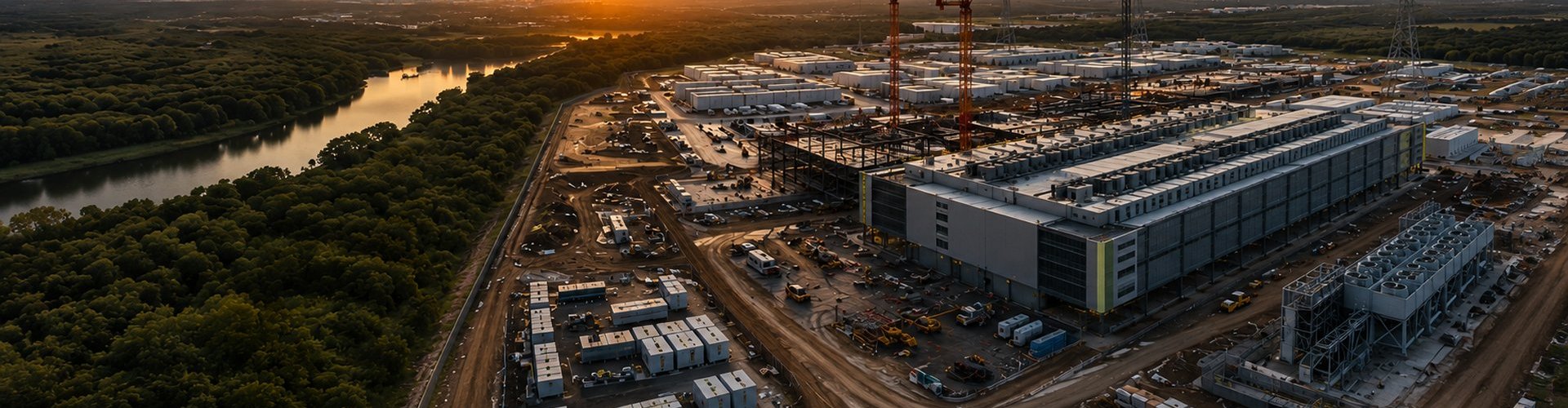
SpaceX Starbase at Boca Chica in Cameron County is the frontier space launch and production anchor of the Texas vertical stack. The campus is where Starship — the largest rocket ever built and the platform on which SpaceX's Mars program, Starlink V3+ deployment, Starshield government satellites, and prospective Golden Dome Space-Based Interceptor missions all rely — is integrated, tested, and launched. Starbase incorporated as a city in 2025 with approximately 500 inhabitants, and the 2025 land swap with the U.S. Fish & Wildlife Service (775 acres of Lower Rio Grande Valley National Wildlife Refuge transferred to SpaceX in exchange for 700 acres of SpaceX land) confirmed the operational footprint expansion required for Starship V3 and V4 program scaling.
What distinguishes Starbase is not merely the launch capability but the integrated SpaceX Texas vertical stack that the campus anchors. Starship's Raptor engines are produced at SpaceX McGregor in McLennan County 350 miles north. Starlink terminal manufacturing and SpaceX advanced packaging operations sit at Bastrop in Bastrop County. The three sites operate as one extended cluster — the Starbase Cluster — through workforce mobility, integrated production planning, shared corporate IP, and the operational interdependence that ties engine production through satellite manufacturing through orbital deployment under unified SpaceX operations. No other US space-launch operator has this depth of vertical integration across multiple state-level sites.
Phase 1 and Phase 2 Operations
Starbase Phase 1 operations have produced and launched Starship through V1 and V2 vehicles, with multiple integrated flight tests demonstrating the stage-zero Mechazilla tower, the booster catch capability, and the broader operational concept. The launch site, production high bay, fabrication tents, and the Mechazilla tower itself are Phase 1 infrastructure, sized for the iteration cadence and vehicle scale of V1 and V2 generations.
Starbase Phase 2 buildout is the substantial expansion driven by Starship V3 and V4 program scaling. V3 is the longer and heavier upgrade with significantly more thrust and payload capability; V4 is the further iteration. Both require larger production halls, additional launch pads, expanded cryogenic and propellant infrastructure, expanded ground support equipment manufacturing, and substantially larger workforce than current Phase 1 operations support. The 2025 land swap with U.S. Fish & Wildlife Service is structurally consistent with Phase 2 requirements, expanding the operational area to support multi-pad operations and significantly higher launch cadence — potentially scaling toward 100+ launches per year at Starbase eventually as the V3 and V4 fleet enter sustained operations.
The Starbase Phase 2 expansion timeline runs through 2026-2030. Each milestone — first V3 production hall completion, first V3 static fire, first V3 orbital flight, first V4 hardware delivery, additional launch pad commissioning — validates or rebases the trajectory. The metro-tier classification of Starbase that the Texas Triangle Cluster page flags as forward-looking is itself a function of Phase 2 scaling; current population in the hundreds will likely grow to thousands of permanent residents and supporting industrial employment as the operational scale required for V3 and V4 production at projected cadence materializes.
The Starbase Cluster
The Starbase Cluster spans Cameron, McLennan, and Bastrop counties as one operationally-integrated SpaceX vertical stack despite the geographic dispersion. The cluster is the AustinIO dataset family's most-cluster-tagged anchor by row count (18 rows tagged Starbase Cluster), reflecting the breadth of the integrated stack and the Cameron County local infrastructure that supports Starbase operations specifically — Port of Brownsville maritime operations, AEP Texas grid interconnect, Brownsville civil contractors, Tesla Megapack on-site behind-the-meter storage at Boca Chica, and the broader Cameron County industrial coordination.
The cluster's geographic distribution is unusual relative to the AustinIO dataset family's other clusters. Most clusters concentrate within a 50-mile radius (Giga Texas Cluster within Travis County, Samsung Taylor Cluster within Williamson and Bell counties, Project Matador Cluster within Carson County). Starbase Cluster spans 350+ miles across three counties because SpaceX's vertical integration was built site-by-site over the past two decades — McGregor predates Starbase, Bastrop is more recent — rather than as a planned single-campus buildout. The operational interdependence is real despite the distance: engines from McGregor ship to Boca Chica for vehicle integration; Starlink terminals from Bastrop integrate into satellites that launch from Starbase; advanced packaging at Bastrop produces silicon that flows into Starlink satellites and prospective SBI satellites for orbital deployment. Distance does not break the operational integration.
Cross-Anchor Position
Starbase's most operationally significant cross-anchor relationship is with the broader Tesla-SpaceX silicon supply chain. Tesla designs AI silicon (AI5, AI6, AI7) at its Austin and global design centers; Samsung Taylor or Tesla Terafab fabricates the silicon under captive-equivalent and in-house arrangements; SpaceX Bastrop performs advanced packaging for radiation-tolerant orbital silicon variants; SpaceX Starbase integrates packaged silicon into Starlink V3+ satellites, Starshield government satellites, and prospective Golden Dome SBI satellites for orbital deployment. The full silicon-to-orbit pipeline runs through Texas without leaving the state at any production stage. Starbase is the deployment anchor — the site where Texas-anchored AI silicon enters Earth orbit.
The Golden Dome SBI program connects Starbase to the broader US national security space-defense supply chain. SpaceX is one of twelve contractors awarded SBI prototype work in 2025-2026; SpaceX's structural advantage among the twelve is the end-to-end vertically-integrated Texas production-and-deployment capability that no other contractor matches. If Golden Dome SBI advances from prototype to production-phase deployment, Starbase becomes one of the most strategically important sites in the US national-security-space supply chain, with significant implications for federal coordination, classified-program designations, and the broader convergence's federal-strategic-infrastructure overlay.
Why Boca Chica
The site selection reflects four structural fits. Latitude advantage at 25.99°N for orbital launches — modest delta-v efficiency for prograde orbital insertion compared to higher-latitude US launch sites. Coastal access for downrange overflight, with launches over the Gulf avoiding populated areas and supporting droneship recovery zones. Land availability at scales that other US coastal launch sites cannot match — Cameron County had the geographic and political conditions for SpaceX to acquire and consolidate the operational area Starship operations require. Regulatory environment that Texas state-level coordination plus Cameron County local-level coordination has been able to navigate FAA and environmental review at faster cadence than alternatives, with the 2025 city incorporation giving SpaceX direct local-government coordination over future expansion.
Suppliers and Co-Located Infrastructure
| Supplier | Proximity |
|---|---|
| ABB Robotics Auburn Hills Operations | Domestic |
| AEP Texas Lower Rio Grande Valley Grid | Adjacent |
| Air Liquide Gulf Coast Network | Texas |
| Amphenol Aerospace Sidney Operations | Domestic |
| Analog Devices Wilmington Operations | Domestic |
| ATI Specialty Rolled Products Operations | Domestic |
| Baker Hughes Houston Turbomachinery Operations | Texas |
| Beckhoff Automation North American Headquarters | Domestic |
| Carpenter Technology Reading Operations | Domestic |
| Chart Industries New Prague Operations | Domestic |
| Commercial Metals Company Texas Operations | Texas |
| Emerson Austin Operations | Texas |
| Endress+Hauser Houston Operations | Texas |
| ESAB North America Denton Operations | Texas |
| FANUC America Rochester Hills Campus | Domestic |
| Glenair Glendale Operations | Domestic |
| Haynes International Kokomo Operations | Domestic |
| Honeywell Aerospace Phoenix Operations | Domestic |
| KUKA Systems North America Operations | Domestic |
| Liebherr USA Newport News Operations | Domestic |
| Lincoln Electric Cleveland Operations | Domestic |
| Linde Gulf Coast Industrial Gas Network | Texas |
| Mammoet Gulf Coast Operations | Texas |
| Manitowoc Shady Grove Operations | Domestic |
| Marotta Controls Montville Operations | Domestic |
| Microchip Technology Chandler Operations | Domestic |
| Moog Space and Defense East Aurora Operations | Domestic |
| Natural Gas Pipeline Supply to Starbase | Adjacent |
| North American Stainless Ghent Mill | Domestic |
| Nucor Steel Texas Operations | Texas |
| Outokumpu Calvert Stainless Steel Mill | Domestic |
| Parker Aerospace Fort Worth Operations | Texas |
| PCC Structurals Portland Operations | Domestic |
| Port of Brownsville Heavy Industrial Port | Adjacent |
| Port of Brownsville Liquid Bulk Terminals | Adjacent |
| Quanta Services Houston Headquarters | Texas |
| Rio Grande LNG Terminal | Adjacent |
| Rockwell Automation Milwaukee Operations | Domestic |
| San Roman Wind Farm | Adjacent |
| Sarens North America Operations | Texas |
| Scot Forge Spring Grove Operations | Domestic |
| Siemens Digital Industries Grand Prairie Operations | Texas |
| SpaceX Giga Bay Foundations Project | Onsite |
| SpaceX McGregor Rocket Development Facility | Texas |
| SpaceX Texas Concrete Construction | Texas |
| SpaceX Texas Construction Materials Supply | Texas |
| Special Metals Huntington Operations | Domestic |
| Starbase Air Separation Unit | Onsite |
| Starbase Avionics Integration Operations | Onsite |
| Starbase Concrete and Aggregate Supply | Adjacent |
| Starbase Giga Bay | Onsite |
| Starbase Ground Support Equipment Fabrication | Onsite |
| Starbase Heat-Shield Production Operations | Onsite |
| Starbase LNG Processing Operations | Onsite |
| Starbase Massey's Test Site | Onsite |
| Starbase Materials and NDE Operations | Onsite |
| Starbase Propellant Farm | Onsite |
| Starbase Raptor Integration Operations | Onsite |
| Starbase Reinforcing Steel Supply | Adjacent |
| Starbase Ring Yard | Onsite |
| Starbase Starfactory | Onsite |
| Starbase Water and Deluge System | Onsite |
| Swagelok Solon Manufacturing Operations | Domestic |
| TE Connectivity Aerospace Operations | Domestic |
| Texas Instruments Dallas Operations | Texas |
| Texas LNG Brownsville Terminal | Adjacent |
| VACCO Industries South El Monte Operations | Domestic |
| Valcor Engineering Springfield Operations | Domestic |
| Wyman-Gordon Houston Operations | Texas |
Constraints and Considerations
Environmental and regulatory continuity is the most material constraint on Starbase's continued expansion. The 2025 land swap with U.S. Fish & Wildlife Service was a major regulatory milestone, but ongoing FAA launch licensing, environmental impact reviews under NEPA, and Cameron County local coordination remain the gating factors for V3 and V4 program scaling. Each launch cadence increase requires regulatory approval that has historically run on multi-month to multi-year cycles; SpaceX's velocity at Starbase depends on continued regulatory acceleration that the current administration has supported but which future administrations may approach differently.
Workforce and housing absorption in Cameron County is a secondary constraint. Phase 2 expansion will require thousands of additional permanent and contract workers in a region whose housing and basic services capacity has historically been calibrated to a much smaller industrial base. The metro-tier emergence the Texas Triangle Cluster page flags is itself a function of how workforce absorption keeps pace with the operational scale-up; if housing and services lag, the workforce concentration becomes a constraint on operations rather than a supporting substrate.
Watching Items
Starship V3 first orbital flight is the highest-impact pending milestone. Subsequent milestones include first V3 reuse (booster and ship), first V4 hardware delivery, expanded launch pad commissioning at Boca Chica, Starbase metro-tier classification recognition (a structural marker of the operational scale-up), and Tesla AI7 radiation-tolerant orbital silicon production milestones tied to Starlink V3+ and prospective Golden Dome SBI satellite integration. Adjacent watching items include the prospective Tesla-SpaceX-xAI merger announcement (anticipated early 2027) which would consolidate Starbase into the merged Musk entity's operations with implications for capital allocation and federal-coordination reach.
Related Coverage
SpaceX McGregor Engine Factory | SpaceX Gigasat Factory