AustinIO > Texas Energy Nexus > Texas Green Hydrogen Hub
Texas Green Hydrogen Hub
Federally-Coordinated Production, Manufacturing, and Research Concentration
The Texas Green Hydrogen Hub combines federally-coordinated regional infrastructure development through the HyVelocity Hub framework, multiple production projects spanning operational construction to early development, an emerging electrolyzer manufacturing concentration anchored in Baytown and Houston, and federally-anchored research and demonstration capability at UT Austin's Center for Electromechanics. The structural integration across coordination, production, manufacturing, and research distinguishes the Texas concentration from any other US green hydrogen geography. As of 2026, the broader Texas hydrogen ecosystem is the only US concentration combining all four pillars at material scale.
What distinguishes the Texas Green Hydrogen Hub at the Texas Nexus level is the speed-to-execution advantage that integrated infrastructure provides. Texas has thousands of miles of dedicated hydrogen pipelines (operating since the 1970s for industrial hydrogen supply to Houston Ship Channel petrochemical operations), abundant low-cost renewable electricity from West Texas wind and Gulf Coast solar, established CO2 supply from Permian Basin gas processing for synthesis applications, deep-water Gulf Coast access for green hydrogen and derivative product export, and the broader oil-and-gas industrial workforce expertise that hydrogen project execution depends on. The combination has converted Texas from a hydrogen production-equipment importer to a domestic manufacturer plus production project host within a single half-decade.
The HyVelocity Hub Coordination Framework
The HyVelocity Hub is one of seven Regional Clean Hydrogen Hubs awarded $1.2 billion in DOE funding under the Bipartisan Infrastructure Law in October 2023. The industry-led collaborative comprises AES Corporation, Air Liquide, Chevron, ExxonMobil, MHI Hydrogen Infrastructure, and Ørsted as primary participants, with administration through GTI Energy plus organizing participants including UT Austin, the Center for Houston's Future, and the Houston Advanced Research Centers. The Hub leverages existing Gulf Coast energy infrastructure (pipelines, refineries, gas facilities) while developing new pipelines, liquefaction facilities, and hydrogen production capacity that the participating operators are deploying independently and through Hub-coordinated arrangements.
The Hub's mixed-color approach distinguishes it from purely-green-hydrogen-focused alternatives. HyVelocity supports both green hydrogen (electrolysis from renewable electricity) and blue hydrogen (steam methane reforming with carbon capture), reflecting the participating operator mix and the Gulf Coast's dual advantages of abundant renewable electricity plus extensive natural gas infrastructure. The integration approach has drawn criticism from green-hydrogen-purist organizations but has also enabled faster scaling and broader operator participation than purely-green alternatives. ExxonMobil's blue hydrogen mega-project at Baytown (covered separately in the Houston Ship Channel spotlight) operates as a HyVelocity-aligned investment leveraging the same broader Gulf Coast hydrogen infrastructure that green production projects depend on.
Hub coordination supports infrastructure development that individual operator projects could not justify independently. Pipeline buildout connecting hydrogen production sites to industrial demand centers, salt cavern hydrogen storage development, port-side liquefaction facilities supporting export to European and Asian markets, and broader workforce-and-supply-chain development collectively represent investment that requires multi-operator coordination plus federal anchor funding. The DOE $1.2 billion allocation is structured to flow through phased project milestones across the participating operators rather than as a single capital allocation, supporting Hub-wide capability development.
Production Projects
Texas hosts multiple green hydrogen production projects spanning the development spectrum from under-construction-with-FID to announced-but-pre-FID. The mix reflects the broader US green hydrogen pipeline pattern in which announcement substantially outpaces execution; the Texas pipeline is more concrete than most US states' equivalent projects given the operational electrolyzer manufacturing in Texas plus the HyVelocity Hub coordination framework.
| Project | Operator | Location | Status / Scope |
|---|---|---|---|
| Project Roadrunner | Infinium | Pecos, Reeves County | Under construction since May 2025; FID closed September 2024 with $200M+ Brookfield + $75M Breakthrough Energy Catalyst financing; world's largest commercial eFuels facility when operational in 2027; 100 MW Electric Hydrogen HYPRPlant electrolyzer; 150 MW NextEra wind PPA; 23,000 tonnes/year (7.6M gallons) of eSAF + e-diesel + e-naphtha; American Airlines and IAG (British Airways, Aer Lingus, Iberia) anchor offtakers |
| AES + Air Products Wilbarger County | AES Corporation + Air Products | Wilbarger County (Texas-Oklahoma border) | $4 billion announced December 2022; 1.4 GW renewable (wind + solar) plus electrolyzer capacity producing 200+ tonnes/day; planned largest US green hydrogen facility when operational 2027; 1,300 construction jobs, 115 permanent operations, 200 transportation/distribution; FID timing not publicly committed |
| Synergen Texas Green Ammonia | Synergen Green Energy | Texas Gulf Coast (specific location not yet public) | FEED agreement with Electric Hydrogen December 2025; FID targeted 2026; operational late 2028; 240 MW electrolyzer (two 120 MW HYPRPlants); 800 MW renewable backing plus battery and hydrogen storage; Topsoe ammonia synthesis loop; 210,000 tonnes/year green ammonia for European/Asian maritime and industrial markets |
| Ørsted Star e-Methanol | Ørsted | Gulf Coast (HyVelocity-affiliated) | Pre-development; green hydrogen plus e-methanol for maritime decarbonization; sized for the broader maritime fuel market; specific scale and FID timing not yet public |
| First Ammonia Texas | First Ammonia | Texas (specific location not public) | Recently pivoted from SOEC to alkaline or PEM electrolysis technology selection; status uncertain; not a committed project |
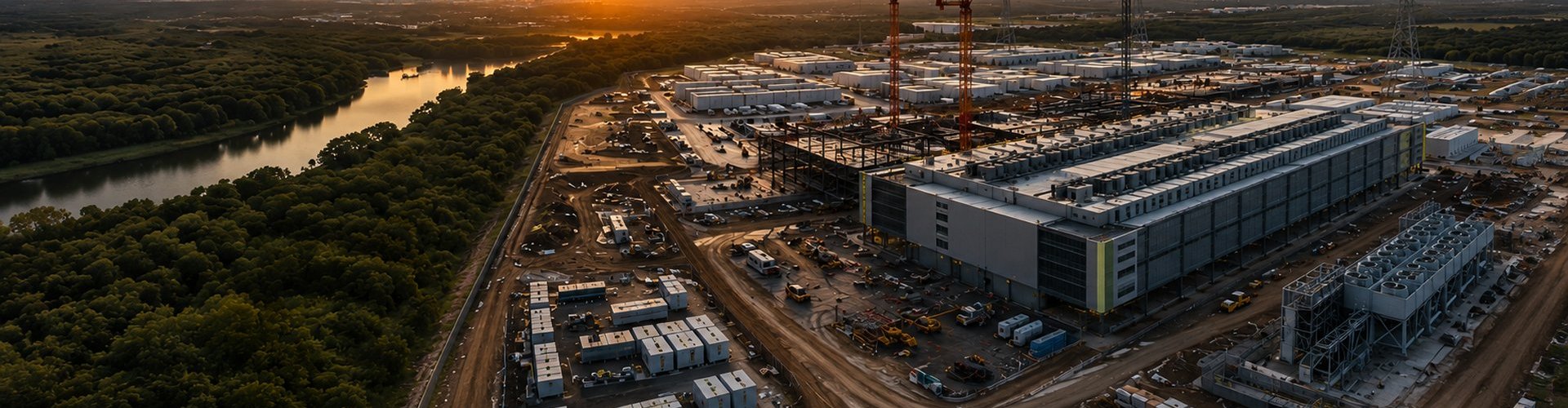
Project Roadrunner is the structural anchor of the Texas green hydrogen production concentration as the only project under active construction with closed FID at major scale. The site at Pecos is structurally distinctive — it repurposes an existing brownfield gas-to-liquids facility, adding new hydrogen and synthesis units rather than building greenfield, which reduces capital cost and timeline. Kinetik Holdings supplies CO2 feedstock via a dedicated pipeline from a nearby Permian Basin gas processing facility, integrating Roadrunner into the broader Permian gas infrastructure that the basin's continued production supports. The 10-year offtake agreement with International Airlines Group plus the American Airlines anchor offtake provide demand-side commitment that reduces project execution risk.
The AES + Air Products Wilbarger County project is the largest announced green hydrogen project in the United States by scale (200+ tonnes/day production, 1.4 GW renewable capacity), but FID has not been publicly committed and the project remains pre-construction as of early 2026. The 2027 commercial operations target appears optimistic given typical project execution timelines; actual operational status by 2027 likely depends on near-term FID commitment plus multi-billion-dollar capital deployment. Air Products' broader portfolio includes parallel green hydrogen projects in the U.S., Saudi Arabia, and other geographies, with project selection across the portfolio reflecting evolving project economics and customer demand.
Electrolyzer Manufacturing Concentration
The Texas electrolyzer manufacturing concentration is one of the most structurally distinctive features of the broader hydrogen ecosystem. Texas hosts three major electrolyzer manufacturing operations supplying both Texas projects and broader US and global hydrogen demand:
John Cockerill Baytown — Belgian engineering firm John Cockerill broke ground on its Baytown electrolyzer gigafactory in December 2023 and completed the facility by late 2024. The Baytown plant is capable of producing approximately 1.0 GW of electrolyzer capacity per year, making it the largest electrolyzer manufacturing facility in the United States. The Baytown siting reflects John Cockerill's first U.S. market entry, drawing on Gulf Coast workforce expertise plus the proximity to hydrogen project demand across the broader region. Pipeline of John Cockerill products supplies both U.S. and export hydrogen project markets through 2030 and beyond.
Thyssenkrupp Nucera Houston — Germany-based Thyssenkrupp Nucera established a Houston office in 2021, growing from 15 employees to 60+ employees with continued expansion underway. A $50 million DOE grant supports mass production of Thyssenkrupp Nucera's 20-megawatt electrolyzer modules in the United States. Thyssenkrupp Nucera is a HyVelocity Hub supporting partner, integrating Houston manufacturing capability with the broader Gulf Coast hydrogen production buildout that the Hub coordinates.
Electric Hydrogen Texas operations — Massachusetts-headquartered Electric Hydrogen manufactures HYPRPlant chemical process modules in Texas through a strategic partnership with Titan Production Equipment, drawing on Texas oil-and-gas industry workforce expertise for the chemical processing side of the company's electrolyzer plant offering. Electric Hydrogen's electrochemical stacks are manufactured at the company's Massachusetts gigafactory, with the integrated HYPRPlant system completed through the Texas-Massachusetts manufacturing partnership. The 100 MW HYPRPlant deployed at Project Roadrunner and the two 120 MW HYPRPlants planned for Synergen's Texas Green Ammonia Project both flow through this Massachusetts-Texas manufacturing chain.
The combined Texas electrolyzer manufacturing capacity supports both domestic Texas project demand and broader U.S. and export project demand. The structural advantage relative to imported electrolyzer supply (particularly from Chinese manufacturers that have historically dominated lower-cost electrolyzer markets) is significant: domestic supply chain, faster delivery, U.S. content qualification for IRA tax credit eligibility, and integration with U.S. workforce development. Continued Texas electrolyzer manufacturing capacity expansion is one of the structural enablers of broader U.S. hydrogen project execution.
Research Substrate at UT Austin
The University of Texas at Austin Center for Electromechanics opened a DOE-supported hydrogen research and demonstration facility in April 2024 — a first-of-its-kind hydrogen proto-hub equipped with onsite electrolyzer producing hydrogen from both renewable natural gas (sourced from a Texas landfill) and water electrolysis powered by solar and wind energy. The facility powers a stationary fuel cell supplying clean reliable power to the Texas Advanced Computing Center, plus fueling stations for a Toyota Mirai fleet and a mobile fueling trailer for offsite hydrogen-powered drone demonstration. UT Austin is also a HyVelocity Hub organizing participant, providing federal-coordination academic substrate parallel to its role anchoring TIE NGMM advanced packaging research and TACC supercomputing infrastructure.
The Center for Electromechanics' role is structurally distinctive among U.S. university hydrogen research operations. Most U.S. university hydrogen research focuses on either basic-science laboratory work (electrochemistry, catalyst development, materials science) or applied-engineering work without operational demonstration capability. UT Austin combines applied research with operational demonstration at scale, with the TACC connection providing customer-pull demand that justifies continued operation. The model is closer to TIE NGMM's federally-anchored research-and-strategic-infrastructure approach than to traditional academic research operation.
Cross-Anchor Position
The Texas Green Hydrogen Hub's most operationally significant cross-anchor relationship is with the Permian Basin and broader Texas natural gas infrastructure. Project Roadrunner draws CO2 feedstock from Permian gas processing operations via Kinetik Holdings' dedicated pipeline; broader green hydrogen production benefits from Texas natural gas infrastructure that supports both blue hydrogen production (with carbon capture) and the broader hydrogen-and-CO2 supply chain. The behind-the-meter Permian gas-fired data center buildout creates parallel pressure on natural gas allocation; whether Texas gas flows to LNG export, AI compute power, petrochemical operations, or hydrogen-and-CCS production depends on relative pricing dynamics that the AI compute infrastructure buildout has materially reshaped.
The relationship with the Houston Ship Channel petrochemical complex is structurally tight. ExxonMobil's blue hydrogen + carbon capture mega-project at Baytown (with ADNOC 35% stake) shares Gulf Coast hydrogen infrastructure with green hydrogen projects across the HyVelocity Hub. The Channel's existing thousands of miles of hydrogen pipelines plus salt cavern storage capacity plus established workforce provides the operational substrate that green hydrogen production projects depend on. The integration is bidirectional — Channel petrochemical operators are increasingly customers for low-carbon hydrogen as decarbonization commitments scale, while hydrogen production benefits from Channel infrastructure and workforce.
The connection to the broader Texas renewable energy buildout is foundational. Project Roadrunner depends on 150 MW of NextEra wind generation supply; Synergen's Texas Green Ammonia Project depends on 800 MW of solar and wind backing; AES Wilbarger depends on 1.4 GW of co-developed renewable capacity. The Roscoe Wind Complex, Samson Solar Energy Center, and broader West Texas wind plus Gulf Coast solar concentrations supply the renewable electricity that green hydrogen production requires. The hydrogen-and-renewable supply chain integration is one of the most material structural advantages Texas provides for green hydrogen operators.
The connection to the Texas LNG Export Hub is substitutional. Both LNG export and green hydrogen / e-fuels production target similar end-customer markets — particularly Asian and European industrial-and-energy customers seeking decarbonization or supply security. As global LNG export capacity expands and as European decarbonization mandates tighten, customer mix evolution between LNG, green ammonia (Synergen's anchor product), green methanol (Ørsted's Star), and eFuels (Roadrunner's product mix) shapes the relative scale of each Texas export concentration. Synergen's specific positioning toward European and Asian maritime decarbonization customers reflects this dynamic — green ammonia for shipping is one of the highest-value-per-tonne hydrogen-derivative markets globally.
Why Texas
The Texas Green Hydrogen Hub's structural advantages compound from multiple directions. Renewable electricity availability at scales no other U.S. region matches at comparable cost — Texas leads U.S. wind generation (42 GW installed) and is among the leaders in solar generation, providing the renewable electricity input that green hydrogen production requires at the lowest U.S. cost basis. Existing hydrogen infrastructure across the Gulf Coast — thousands of miles of dedicated hydrogen pipelines, salt cavern storage capacity, established industrial hydrogen demand from petrochemical and refining operations — provides operational substrate that no other U.S. region matches. Deep-water Gulf access plus port infrastructure supports green hydrogen, green ammonia, and e-fuels export to European and Asian markets at scales no inland concentration could achieve.
Workforce and supplier ring depth in Texas oil-and-gas plus chemical processing supports rapid project execution at scales that other U.S. regions cannot match. Construction contractors, electrical contractors, mechanical contractors, chemical processing engineers, and specialty trades are all available at Texas Gulf Coast and broader Texas industrial sites. Electric Hydrogen's specific decision to manufacture HYPRPlant chemical process modules in Texas (versus elsewhere in the U.S.) reflects this workforce advantage — chemical processing manufacturing requires the specific engineering and skilled trades concentration that Texas oil-and-gas provides at scale.
Texas state-level regulatory environment supports rapid project execution and federal-policy alignment under the current administration prioritizes both AI infrastructure and energy infrastructure expansion. The combination supports continued green hydrogen project siting and execution, though the federal-policy environment is more nuanced for green hydrogen specifically given the current administration's broader fossil fuel prioritization. The 45V hydrogen production tax credit framework remains operational under the IRA but faces uncertainty about long-term continuation, with a Republican House bill proposing tax credit eligibility only for projects starting construction before 2026.
Constraints and Considerations
The 45V tax credit policy environment is the most material constraint shaping continued project execution pace. The IRA framework provides up to $3/kg in tax credits for green hydrogen production meeting strict carbon intensity and clean-power-sourcing requirements. Project economics for both operational projects (Roadrunner) and announced projects (Synergen, AES Wilbarger) depend substantially on continued 45V treatment plus the related 40B and 45Z sustainable fuel credits. Republican legislative proposals to limit tax credit eligibility to projects starting construction before January 2026 would substantially affect post-2025 announced projects but not Roadrunner or other projects with construction commenced. The federal-policy environment under the current administration is creating uncertainty about long-term policy direction even as near-term IRA framework provisions remain operational.
Announcement-to-execution gap is the second consideration. The IEA noted in its March 2026 Energy Technology Perspectives report that the global hydrogen sector has experienced "stark corrections" with project cancellations, delays, and bankruptcies that have led production and consumption forecasts to be cut sharply. The Texas pipeline is more concrete than most U.S. states' equivalent projects given the operational electrolyzer manufacturing, the HyVelocity Hub coordination, and Roadrunner's construction-with-FID status. But announced projects (AES Wilbarger, Synergen, Ørsted Star, First Ammonia) face the same execution risk that has affected announced projects globally. Spotlight coverage focuses on operational and construction-committed substance rather than aggregating announcements as if execution were assured.
Power supply competition with AI compute infrastructure is the third consideration. The IEA specifically called out AI compute power competition as a structural challenge to hydrogen project economics; behind-the-meter Permian gas-fired data centers, ERCOT-supplied hyperscaler datacenter buildouts, and broader Texas AI compute infrastructure compete with green hydrogen production for renewable electricity supply and for natural gas feedstock supply (in blue hydrogen alternatives). Continued green hydrogen project economics depend on renewable electricity supply at competitive prices despite the broader Texas demand growth from AI compute, oil-and-gas electrification, and adjacent industrial buildout.
Customer demand sustainability is the fourth consideration. Green hydrogen and derivative products (green ammonia, green methanol, eFuels) currently command price premiums above conventional alternatives. Continued customer commitment depends on regulatory mandates (UK SAF Mandate, European maritime decarbonization regulations), corporate sustainability commitments, and broader carbon pricing developments. American Airlines and IAG anchor offtake at Roadrunner reflects current customer commitment scale; broader sustained demand growth depends on continued regulatory and corporate sustainability environment that could shift over the project lifetimes.
Related Coverage
Houston Ship Channel Petrochemical | Texas LNG Export Hub | Permian Basin Energy | Roscoe Wind Complex | Samson Solar Energy Center | Texas Water Supply & Stress