AustinIO > The Texas Nexus > Texas Triangle Cluster > Austin Metro B2B Directory > Apple Austin Campus
Apple Austin Campus
Apple Silicon Design Anchor and Largest Apple Workforce Outside Cupertino
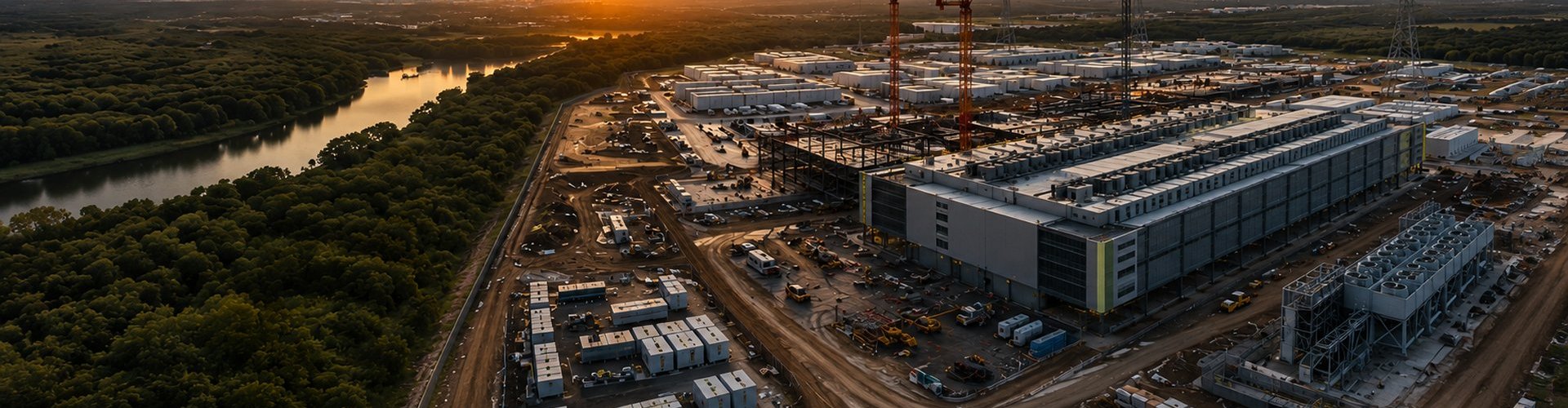
Apple's Austin campus is the company's largest workforce concentration outside Cupertino and the structural anchor of Apple silicon design — the in-house custom processor program that produces the A-series chips for iPhone and iPad, the M-series chips for Mac, the S-series for Apple Watch, and adjacent silicon across Apple's product portfolio. The northwest Austin campus spans approximately three million square feet and houses engineering, research and development, operations, and customer support teams. A second Austin campus is under construction with three completed office buildings already exceeding one million square feet housing thousands of additional employees, plus a new R&D lab for Hardware Engineering, Hardware Technology, and Software Engineering teams.
Apple has more than 13,000 team members across Texas as of early 2026, with the Austin campus expected to grow to 15,000+ employees at full capacity. The Austin presence dates back to 1992 and has expanded continuously over the subsequent three decades. The Austin Statesman acknowledged in 2016 that Apple's Austin growth had been "discreet" — the company expanded the workforce substantially without significant public attention, with Senior Vice President of Hardware Technologies Johny Srouji stating that Apple's Austin team was "one of our most important engineering groups, designing chips that go into all the devices we sell."
Apple Silicon Design Operations
The strategic significance of Apple Austin centers on the silicon design teams. Apple's transition from third-party processors to in-house custom silicon — beginning with the A4 chip in the iPhone 4 in 2010, accelerating through the A-series for iPhone and iPad, and culminating in the Apple Silicon transition for Mac (M1 in 2020 through M5 in current devices) — was anchored substantially in Austin engineering. The Austin team contributed to chip designs that have shipped in approximately one billion devices over the past decade, making Apple Austin one of the most consequential silicon design operations in the world by volume of devices sold.
The teams operate across multiple disciplines. Hardware Engineering teams design the silicon architecture, IP blocks, and integration approaches for each generation of Apple Silicon. Hardware Technology teams develop the underlying technology platforms including memory, signal processing, and power management subsystems. Software Engineering teams build the firmware, drivers, and system-level software that integrates Apple silicon with macOS, iOS, iPadOS, and adjacent operating systems. The vertical integration across hardware and software — design, validation, firmware, system software — happens substantially within the Austin engineering cluster and the broader Apple Silicon organization that extends to Cupertino, San Diego, and Munich.
The fabrication of Apple Silicon designed in Austin happens at TSMC's Fab 21 in Arizona for current-generation chips. Apple is the largest customer at TSMC Arizona, with mass production of Apple chips beginning in early 2025; Apple expects to purchase well over 100 million advanced chips from TSMC's Arizona facility in 2026. The design-Austin-to-fabrication-Arizona supply chain represents one of the largest US-anchored advanced semiconductor flows currently operating, complemented by Apple's broader US chip purchasing — the company has sourced more than 20 billion U.S.-made chips from 24 factories across 12 states, working with suppliers including TSMC, Broadcom, Texas Instruments, Amkor, GlobalWafers, and Corning.
The Two Austin Campuses
The first Apple Austin campus is at 6900 W. Parmer Lane in northwest Austin, established as Apple's primary Texas footprint with approximately three million square feet of office, engineering, and operations space across multiple buildings. The campus houses the silicon design teams plus a Mac Pro manufacturing operation that has produced the high-end Mac Pro desktop in Austin since 2013 — the only Apple-branded computer assembled in the United States.
The second Apple Austin campus is the more recent expansion, with Apple's continued investment in the Austin presence reflecting both workforce growth and strategic-importance signaling. Three completed buildings on the second campus already exceed one million square feet of office space and house thousands of employees in current operations. The new R&D lab on the second campus accommodates Hardware Engineering, Hardware Technology, and Software Engineering teams in a single integrated facility designed for the cross-discipline collaboration that Apple Silicon development requires. Construction of additional second-campus capacity continues through 2026 and beyond, supporting the company's growth toward 15,000+ Austin employees at full capacity.
Apple's Texas footprint extends beyond Austin to a separate manufacturing operation in Houston announced in February 2025 as part of the company's $600 billion four-year U.S. investment plan. The Houston facility is structurally distinct from the Austin operations — Houston handles AI server manufacturing for Apple's Private Cloud Compute infrastructure plus Mac mini production, while Austin remains the corporate-and-design anchor for Apple Silicon and adjacent engineering disciplines.
Cross-Anchor Position
Apple Austin's most operationally significant cross-anchor relationship is with the broader Austin semiconductor design and manufacturing concentration. Samsung Taylor's leading-edge logic fabrication may eventually produce Apple silicon under the captive-equivalent foundry arrangement that Tesla currently anchors; Tesla Terafab's prospective leading-edge in-house fabrication, the broader US foundry capability buildout, and Apple's continued multi-foundry sourcing strategy all shape whether Apple Austin's design operations eventually source from Texas-based fabrication. Currently the design-fabrication flow runs Austin-to-Arizona-via-TSMC; whether Texas fabrication enters the flow depends on Samsung Taylor and Tesla Terafab operational maturation through the late 2020s.
The connection to the broader Austin metro semiconductor cluster runs through workforce mobility and supplier-and-design-tools relationships. AMD Austin's design and verification operations, NXP Austin's mixed-signal silicon, IBM Austin's research and Power architecture work, Tesla's silicon design teams at Giga Texas, Intel Austin's broader silicon design operations, and the smaller but growing AI silicon design startups (including Tenstorrent's Austin presence) collectively form a semiconductor design workforce that Apple Austin both draws from and contributes to. Workforce mobility across operators is real even as Apple's compensation structure and employer brand support recruitment retention.
The relationship with the broader Texas critical-minerals supply chain runs through Apple's $500 million commitment to MP Materials Fort Worth in 2025 for magnet supply and recycling. Apple's commitment is an anchor customer underwriting MP Materials' Independence facility operations and the planned 10X campus at Northlake. The structural integration of design (Austin) plus magnet supply (Fort Worth) plus chip fabrication (Arizona) plus server manufacturing (Houston) plus retail and services across the broader U.S. footprint creates one of the deepest U.S. industrial integrations of any technology company.
The federally-anchored research substrate at TIE NGMM in Austin and TACC at UT Austin and Sabey Round Rock provides indirect substrate for Apple's broader silicon design and AI research operations. Apple does not directly participate in TIE NGMM consortium membership but benefits from the broader workforce-and-research substrate that the federally-anchored operations create. The advanced packaging research at TIE NGMM may eventually become relevant to Apple's prospective adoption of 3DHI techniques in Apple Silicon.
Why Austin
Apple's Austin presence reflects four structural fits that have compounded over three decades. Texas tech workforce depth provides the engineering and operations talent pool that Apple Silicon scaling requires; the broader Austin metro semiconductor cluster (AMD, IBM, Tesla, Samsung, Intel, NXP) plus UT Austin's engineering programs supply both new hires and experienced engineers. Lower cost basis for engineering workforce and operational infrastructure than California provides cost structure advantages over comparable Cupertino-area expansion. Texas state-level regulatory environment and city-of-Austin economic development incentives — including approximately $35 million in tax breaks over time across city, county, and state agreements — provided the financial structure that the multi-decade campus buildout required.
The pattern of compounded investment matters operationally. Each subsequent Apple Austin expansion (the original 1992 presence, the 2010 silicon design buildout, the 2016 first-campus expansion to 6,000 employees, the 2018 announcement of the second campus, the continued growth through 2026) builds on the workforce, supplier, and operational substrate from previous phases. Greenfield siting for a workforce of 15,000+ engineers and operations staff would face workforce-acquisition friction that Austin's sustained presence has accumulated past. Apple's Austin presence is now one of the highest-switching-cost engineering operations in the company's global footprint.
Constraints and Considerations
Workforce competition with adjacent Austin-area semiconductor and design operators is the most material constraint on continued growth. Samsung Taylor's ramp through 2026-2028, Tesla Terafab's silicon design and prospective fabrication scaling, Intel Austin's expansion via the Terafab partnership, and continued growth at AMD, IBM, and NXP all compete for the same engineering and operations talent pool that Apple Austin draws from. The Austin metro semiconductor labor market is increasingly saturated; net new workforce growth depends on inbound talent migration plus university pipeline expansion plus retention competitiveness.
Strategic-direction considerations apply at the silicon design level. Apple's continued vertical integration of silicon design across product categories supports continued Austin engineering expansion; any strategic shift toward third-party silicon for specific product categories or AI-server applications would affect Austin's growth trajectory. The company's broader AI strategy and Private Cloud Compute architecture create new silicon design demands that Austin engineering operations need to support; conversely, AI silicon competition with NVIDIA and other operators creates pressure to accelerate development cadence.
Texas state-level political and regulatory continuity is the third consideration. Apple's $35 million tax incentive structure plus broader state-level support for technology operations have been stable across multiple Texas administrations, but continued state-and-local alignment depends on ongoing political continuity. Major shifts in Texas regulatory environment for technology operations or in workforce mobility policy could affect the operational environment that Apple Austin's continued growth depends on.
Watching Items
Second campus construction completion through 2026 and beyond is the near-term operational milestone validating the workforce growth trajectory toward 15,000+. Apple Silicon generation transitions (M-series progression, A-series progression, AI-specific silicon for Private Cloud Compute) shape the engineering-discipline mix at Austin operations. TSMC Arizona to Samsung Taylor transition possibility — whether Apple eventually sources fabrication from Samsung Taylor in addition to TSMC Arizona — would deepen the Texas semiconductor supply chain integration. MP Materials Fort Worth Independence facility scaling and 10X campus construction validate the magnet supply chain that Apple has anchored.
Related Coverage
Top 10 Semiconductor Operators in Austin | Austin Semiconductor Ecosystem | Companies Headquartered in Austin | Dell Round Rock Headquarters | Austin Advanced Mfg