AustinIO > The Texas Nexus > Texas Triangle Cluster > Austin Metro B2B Directory > Dell Round Rock Headquarters
Dell Round Rock Headquarters
Global HQ and AI Server Platform Anchor of the Williamson County Corporate Footprint
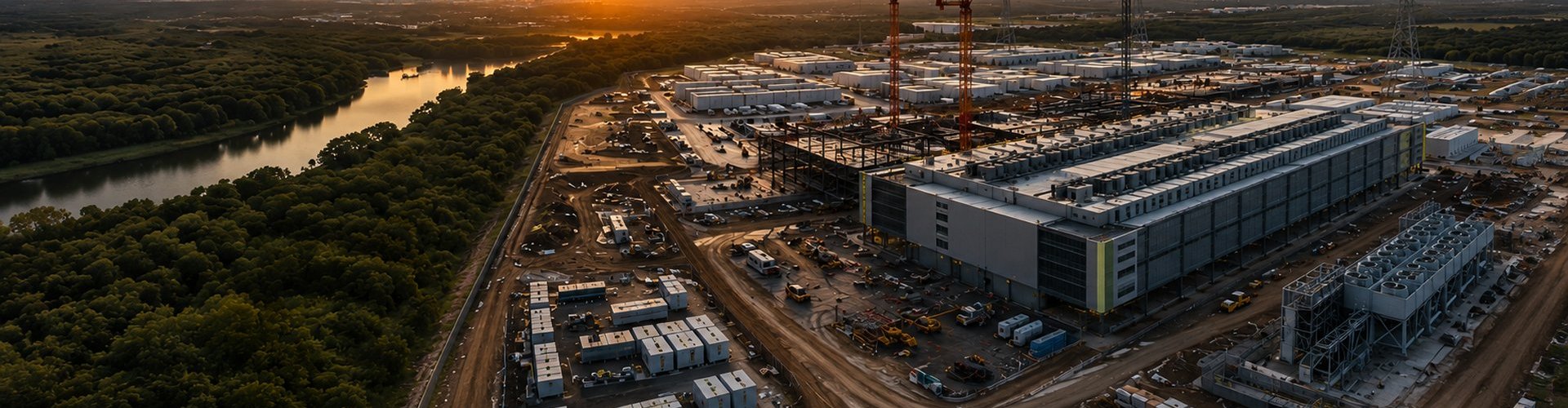
Dell Technologies' global headquarters at 1 Dell Way in Round Rock anchors one of the largest enterprise IT infrastructure operations in the world and is the structural anchor of the Williamson County corporate-and-design footprint. Approximately 13,000 employees work at the Round Rock headquarters out of Dell's roughly 108,000 employees globally, supporting product development, engineering, sales, supply chain operations, and corporate functions across Dell's server, storage, networking, client computing, and services portfolios. In September 2025 Round Rock City Council approved Dell's nomination for a $25 million five-year expansion under the Texas Enterprise Zone Program, supporting new construction, renovations, and equipment investment across the multi-building campus.
Dell's AI server business is the strategic spine of current operations. The company shipped $10 billion of AI solutions in the first half of fiscal year 2026 — surpassing all shipments in fiscal year 2025 — and raised AI server shipment guidance for fiscal year 2026 to $20 billion. AI server demand has driven record quarterly revenue including $29.8 billion in Q2 FY2026 (up 19 percent year-over-year), with full-year revenue outlook raised to $107 billion. The Round Rock headquarters is the operational anchor for the AI server platform business that has become Dell's most strategically significant operational segment. Dell PowerEdge servers integrated with NVIDIA Grace Blackwell accelerators are the platform on which TACC's Horizon supercomputer is built — the academic supercomputing flagship that Dell, NVIDIA, VAST Data, Spectra Logic, Sabey, and Versity collectively support at Sabey Round Rock just minutes from Dell's headquarters campus.
Operational Footprint at Round Rock
The 1 Dell Way campus has been Dell's headquarters since 1994 — a decade after Michael Dell founded the company in his University of Texas at Austin dorm room in 1984. The multi-building campus houses engineering, product development, supply chain operations, executive functions, customer briefing centers, and the broader corporate operations that Dell's global business depends on. The campus structure includes four primary buildings plus supporting infrastructure, with the September 2025 expansion approval covering renovations and new construction across the existing campus footprint plus equipment investment supporting AI server platform development and integration capability.
Dell's reinstated return-to-work policy requires employees who reside near an office or headquarters to work onsite five days per week, concentrating Round Rock-area workforce activity at the headquarters campus rather than distributed across home offices. The policy has reinforced the campus's role as the operational center of Dell's global business and supports the workforce density that the $25 million expansion is designed to accommodate. The expansion's job retention focus (500 jobs tied to the incentive, with 35 percent of new or replacement roles filled by economically disadvantaged workers, veterans, or enterprise zone residents) reflects ongoing Round Rock-and-Williamson County economic development collaboration.
The broader Williamson County corporate footprint anchored at Dell extends to other major operators including Emerson Automation Solutions (also headquartered in Round Rock), Toppan Photomasks (legacy Tekscend / Toppan Photomasks operations supplying the Texas semiconductor cluster), and the broader concentration of corporate and supply chain operations across Round Rock, Hutto, Cedar Park, and Pflugerville. The county's industrial and corporate base concentrates particularly along the Highway 79 corridor and the Austin-Taylor Manufacturing Axis, with Dell's continued investment validating Round Rock specifically as a corporate-and-design anchor.
The AI Server Platform Business
Dell's AI server business has scaled substantially through the AI infrastructure buildout cycle. PowerEdge servers integrated with NVIDIA Grace Hopper, Grace Blackwell, and successor accelerator platforms supply the underlying hardware platform that hyperscalers, enterprise customers, government and academic institutions, and AI-specific customers deploy at scale. The integration of Dell PowerEdge platforms with the broader rack-scale and cluster-scale architectures (NVL72 for Blackwell, future NVL platforms for successor generations) makes Dell one of the structural OEM anchors of the AI infrastructure industry alongside Supermicro, HPE, Lenovo, and the broader server vendor ecosystem.
The TACC Horizon supercomputer at Sabey Round Rock is built on Dell PowerEdge XE9712 platforms, integrating more than 4,000 NVIDIA Grace Blackwell accelerators and over 1 million CPU cores. The deployment represents one of the largest single-system Dell PowerEdge installations in the world and validates the platform at NSF Leadership-Class Computing Facility scale. The geographic proximity between Dell's Round Rock headquarters and TACC's Horizon installation at Sabey Round Rock allows operational collaboration that geographically distributed deployments would not support at comparable cadence.
The 7,000 employees Dell devotes to engineering plus manufacturing and supply chain operations supports the AI server platform's continued development and scaling. Future server generations supporting NVIDIA Vera Rubin and successor accelerator platforms, plus the broader AI cluster architecture work that hyperscaler customers require, depends on continued Round Rock engineering capability. The September 2025 $25M expansion is structurally tied to supporting this engineering and operational capacity.
Cross-Anchor Position
Dell Round Rock's most operationally significant cross-anchor relationship is with the broader Austin-Taylor AI compute and semiconductor ecosystem. The TACC Horizon supercomputer at Sabey Round Rock is the most direct integration — Dell as PowerEdge platform supplier, with the Round Rock-to-Sabey Round Rock geographic proximity supporting operational collaboration across system bring-up, performance optimization, and ongoing platform development. The deployment validates Dell's AI server platform at academic-supercomputing scale and provides operational reference for future deployments at hyperscaler, enterprise, and government customers.
The connection to the Texas semiconductor cluster runs through Dell's silicon supply chain. NVIDIA Grace Blackwell silicon currently flows through TSMC manufacturing; future NVIDIA generations may flow through Samsung Taylor or Tesla Terafab as the Texas semiconductor cluster matures. Dell's AI server platform business depends on continued silicon supply, with the Texas semiconductor cluster's growth potentially deepening the Texas-anchored portion of Dell's supply chain over time. The broader Austin design cluster (AMD, Apple, Intel, NXP, Tesla) supplies design and verification expertise that Dell's engineering teams collaborate with on platform integration.
The relationship with Stargate Abilene, Meta Temple, and other Texas hyperscaler datacenter operators is structurally significant at the customer level. Dell PowerEdge servers are deployed across hyperscaler datacenter operations including Stargate Abilene's NVIDIA GB200 deployment via Crusoe and Oracle. The broader Texas hyperscaler datacenter buildout creates ongoing customer pull for Dell's AI server platform. The Project Matador buildout at Fermi America in the Panhandle, the Microsoft adjacent campus at Abilene, and the Apple Houston AI server manufacturing operation collectively reinforce Texas's role as a major customer market for Dell's AI infrastructure.
Dell's Williamson County workforce concentration intersects with the broader Williamson County industrial buildout. Samsung Taylor's ramp brings substantial workforce demand at adjacent facilities; Tesla Terafab's prospective fabrication operation extends the corridor's operations toward Williamson County silicon manufacturing capability. The corporate-and-design density that Dell anchors complements the manufacturing-and-fabrication density that Samsung Taylor, Tesla, and the broader Williamson County supplier ring concentrate further north along the Highway 79 corridor and the Austin-Taylor Manufacturing Axis.
Why Round Rock
Michael Dell's selection of Round Rock for the company headquarters in 1994 reflected geographic proximity to UT Austin (the company's founding location), the Austin metro tech workforce pool, and Round Rock's industrial infrastructure that supported headquarters scaling. The selection has compounded over three decades, with Round Rock evolving from a smaller Austin suburb into a major Williamson County corporate-and-industrial anchor in part through Dell's continued investment. Multiple Texas Enterprise Zone designations (Dell has received six historical designations since 2005, with the September 2025 designation as the seventh) reflect sustained state-and-local support for Dell's continued investment.
The selection also reflects Texas state-level regulatory environment favorable to corporate operations, lower cost basis than coastal alternatives, and the workforce depth that the broader Austin metro provides. UT Austin's continued engineering pipeline, Texas A&M's broader engineering programs, and the Austin metro's Computer Science and Electrical Engineering academic concentration supply Dell's continued workforce needs. Local government partnership with Round Rock and Williamson County has supported ongoing infrastructure investment around the 1 Dell Way campus including transportation access, utility infrastructure, and adjacent commercial development.
Constraints and Considerations
Workforce contraction trajectory is the most material consideration shaping current operations. Dell has cut its global workforce by approximately 10 percent each of the past two fiscal years, shedding roughly 25,000 jobs since early 2023. The company has not specifically disclosed how the reductions have affected the Round Rock workforce, but the broader contraction creates ongoing uncertainty about long-term headcount at the headquarters campus. The September 2025 $25M expansion announcement plus the 500-job retention commitment under the Texas Enterprise Zone designation suggests continued investment in Round Rock specifically even as the broader global workforce contracts.
AI server platform competition is the secondary consideration. Supermicro, HPE, Lenovo, and a broader OEM cohort compete with Dell for the AI server platform market. Hyperscaler customers increasingly design custom server platforms (Meta's MTIA platforms, Google's TPU systems, Microsoft's Maia accelerators) that bypass traditional OEM relationships. Continued Dell market share in AI server platforms depends on maintaining the platform integration and supply chain capability that hyperscaler and enterprise customers require, with the platform development engineering at Round Rock as the operational center of that capability.
Capital structure considerations apply at the broader corporate level. Dell's stock declined more than 10 percent the day after Q2 FY2026 earnings despite record revenue, reflecting investor skepticism about whether AI server margins will sustain at scale. Continued AI server platform success requires both volume (which the $20B FY2026 guidance supports) and profitability sustained across product cycles, with Round Rock engineering capability being the structural input to platform competitiveness.
Watching Items
$25M five-year expansion construction and equipment installation milestones through 2026-2030 validate continued Round Rock investment. AI server shipment trajectory through fiscal year 2026 and beyond shapes whether the $20B annual run rate sustains. NVIDIA Vera Rubin generation deployment timing affects platform transition cycles. TACC Horizon production launch in spring 2026 validates the academic-supercomputing reference deployment. Hyperscaler customer mix evolution — including continued shipments to Stargate-program sites, Project Matador, Apple Houston, and adjacent Texas AI infrastructure deployments — shapes the geographic distribution of Dell's AI server business. Adjacent watching items include Samsung Taylor and Tesla Terafab production milestones that may shift NVIDIA silicon manufacturing toward Texas-based fabrication, plus any Dell announcements of additional Texas operations beyond Round Rock.
Related Coverage
Companies Headquartered in Austin | Austin Data Centers | Apple Austin Campus | Austin Advanced Mfg | Austin Semiconductor Ecosystem | Horizon TACC Supercomputer