AustinIO > The Austin Supercluster > Giga Austin Nexus > Tesla Giga Texas Complex > Optimus Factory at Tesla Giga Texas
Optimus Factory at Tesla Giga Texas
Tesla is building the Optimus 4 factory on the North Campus of Tesla Giga Texas in eastern Travis County, a purpose-built plant designed for a long-term capacity of 10 million humanoid robots per year. Elon Musk wrote on X on January 29, 2026 that "Optimus 4 will be built in Texas at much higher volume." Optimus 4 is the next-generation robot after Optimus V3, which Tesla builds at Fremont.
The first Optimus line runs at Tesla's Fremont, California factory, in the assembly bays that built the Model S and Model X. It builds Optimus V3 and is designed for 1 million robots per year. Tesla has disclosed no unit output from either site and had made no external Optimus sales as of August 2026.
Tesla's Q1 2026 shareholder update, released April 22, 2026 and furnished on Form 8-K, set out both lines: first-generation production lines being installed at Fremont, and a second-generation line at Giga Texas designed for 10 million units a year, starting in 2027. Tesla numbers the production lines separately from the robots: the first-generation line builds Optimus V3, and the second-generation line will build Optimus 4.
The Optimus building is one part of the 5.2-million-square-foot North Campus expansion filed with Travis County in March 2026. The expansion also holds the Terafab Research Fab (groundbreaking April 22, 2026), the Cortex 2 AI training halls covered on the Giga Texas Cortex page, Megapack production and supporting infrastructure. Construction investment across the expansion is estimated at $5-10 billion.
Fremont Builds Optimus V3, Giga Texas Will Build Optimus 4
| Site | Robot | Site Type | Annual Capacity Target | Role |
|---|---|---|---|---|
| Fremont, California | Optimus V3 (first-generation production line) | Retrofit (converted Model S/X assembly bays) | 1 million units | Pilot line and production-engineering proving ground |
| Giga Texas (North Campus) | Optimus 4 (second-generation production line) | Purpose-built on undeveloped land | 10 million units (long-term design target) | Volume production |
Fremont builds Optimus V3 on the first-generation line. Tesla ended Model S and Model X production in early May 2026, closing a 14-year run for the Model S and an 11-year run for the Model X, and cleared the final assembly bays for Optimus.
On the Q1 2026 earnings call, Elon Musk targeted first Optimus production at Fremont for late July or August 2026. Tesla's Q2 2026 update on July 22 still described the lines as being installed in anticipation of production later in 2026. Investor coverage in late August 2026 reported that Optimus had entered production at Fremont; Tesla has given no unit count.
Musk wrote on X on July 1 that "Optimus production will be extremely slow at first, as everything is new," and has called the 2026 production rate "literally impossible to predict" because the robot has about 10,000 unique parts on an entirely new line. Early Fremont units go to Tesla's internal Optimus Academy, where robots learn simple factory skills before moving on to productive tasks.
Giga Texas will build Optimus 4 on the second-generation line, designed for 10 times the Fremont throughput. Tesla is building it on undeveloped North Campus land, so the building can be laid out around the robot's production flow. High-volume Texas production targets summer 2027 and carries over lessons from the Fremont ramp. Musk described Optimus 4 on the Q2 2026 call as "much more vertically integrated" than V3. Consumer availability is targeted for the end of 2027 at the earliest.
Construction on the Giga Texas North Campus
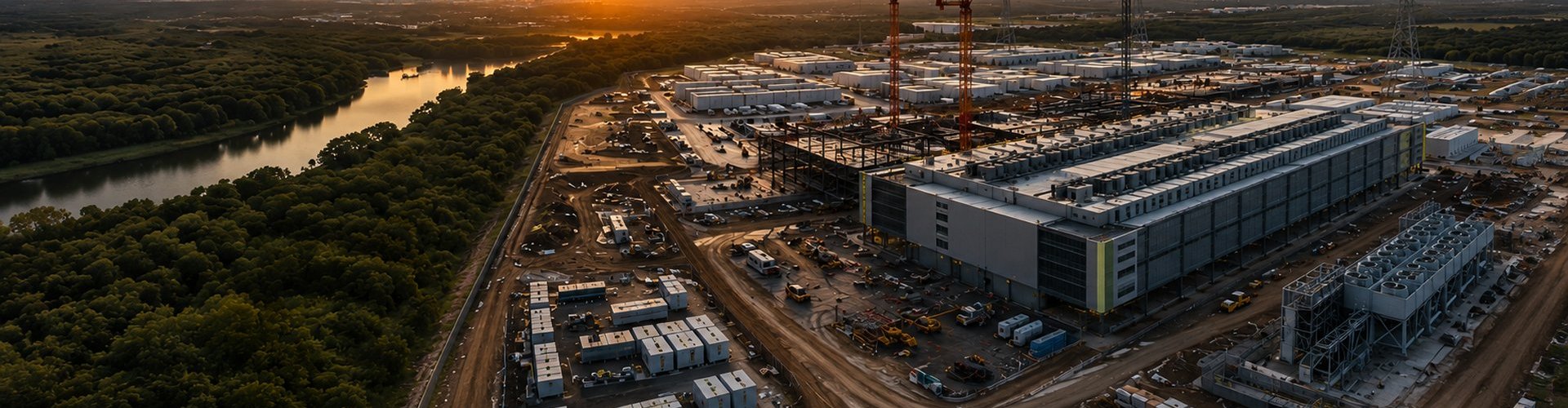
The Optimus factory sits beside the existing 10-million-square-foot Giga Texas vehicle plant along SH 130. Tesla rarely posts construction updates for the building, so drone footage by Joe Tegtmeyer is the main public record of its progress.
- Late March 2026: groundbreaking on the North Campus.
- May 27, 2026: first structural steel rising.
- Late June 2026: seven large cranes assembling the steel superstructure at once; floor decking under way; structure past several floors.
- Early August 2026: north perimeter grade beam fully formed with rounded corners; south beam emerging, fixing the building's final length at roughly 4,000 feet or more, close to the length of the main Giga Texas building and 50-70 meters narrower.
- Mid-September 2026: steel within about five column grids of the north perimeter beam; concrete going in on the three upper floors; rebar, footing and grade-beam work continuing at ground level.
Tesla has not given a completion date for the building or said when cladding, mechanical work or equipment installation will begin.
Optimus V3 Hardware
Optimus V3 (Version 3) is the first Optimus designed for high-volume manufacturing. "Gen 3" refers to the upgraded hands, with 22 degrees of freedom (DoF, the number of independent joint motions) and 50 actuators, first fitted to a Gen 2 body; V3 is the complete new robot built around those hands. The body keeps the Gen 2 size, about 1.73 meters tall and 57 kilograms.
Tesla had not publicly unveiled V3 or published an official specification sheet as of August 2026. Musk moved the reveal from Q1 2026 to "probably middle of this year" on the April 22 earnings call. The figures below come from Tesla presentations, earnings calls and patent filings.
| Specification | Optimus V3 |
|---|---|
| Height | ~1.73 meters |
| Mass | ~57 kilograms |
| Total degrees of freedom | ~72 (28 body + 22 per hand × 2) |
| Hand DoF | 22 per hand |
| Actuators per forearm/hand assembly | 25 (50 total across both arms) |
| Hand actuation method | Tendon-driven cables, with actuators in the forearm, not the hand (biomimetic) |
| Total unique components per robot | ~10,000 |
| On-board AI compute | Tesla AI5 chip (~5x the memory bandwidth of AI4) |
| Battery | ~2.3 kWh (8 hr light-duty / 4-6 hr intensive operation) |
| Natural language | xAI Grok large language model (LLM) |
Tesla filed four international patents on the forearm, wrist, joint and hand in April 2026, the first detailed public view of the production mechanics. Musk has said the hand accounts for about 60% of the engineering difficulty in the Optimus program.
Most Optimus components have no existing supply base at the cost and quality Tesla requires, so Tesla builds most of the actuator stack in-house, including harmonic drives, planetary roller screws and joint assemblies.
Semiconductor Content per Robot
Each Optimus contains an estimated 1,100-2,200 semiconductor devices across nine categories.
| Category | Function |
|---|---|
| Logic and compute | Main inference system on chip (SoC, the AI5), subsystem controllers |
| Memory | DRAM (dynamic random-access memory), flash, embedded memory |
| Power semiconductors (largest count) | Silicon carbide (SiC) and gallium nitride (GaN) MOSFETs (metal-oxide-semiconductor field-effect transistors) for actuator drive and DC-DC power conversion (400-800 per robot) |
| Sensors | Tactile, force/torque, inertial measurement unit (IMU), position, temperature, voltage, current |
| Analog and mixed-signal | Signal conditioning, analog-to-digital and digital-to-analog converters (ADC/DAC), amplifiers |
| Embedded microcontrollers | Joint-level motor control, peripheral subsystems |
| RF and networking | Radio frequency (RF) links for Wi-Fi and cellular, internal data network |
| Optoelectronics | Cameras, LiDAR (light detection and ranging, where fitted), display drivers |
| Security silicon | Secure boot, cryptographic acceleration, over-the-air (OTA) update integrity |
Power semiconductors are the largest category, at 400-800 devices per robot, because each of the roughly 78 actuators (28 in the body, 50 in the forearms) needs its own three-phase motor drive with voltage, current, speed, torque, position and temperature sensing. Each finger and toe carries at least one tactile pressure sensor, and each battery cell has voltage monitoring, with multiple temperature sensors through the pack.
At the 10-million-unit Giga Texas design capacity, Optimus production alone would need an estimated 4-8 billion power semiconductor devices a year, more than current global SiC and GaN production combined. That demand is a main reason Tesla is placing the Optimus factory beside the Terafab Research Fab, Tesla's pilot line for its own chip process technology. AI5 itself is fabricated today at Samsung Taylor in Williamson County.
Detailed semiconductor stack coverage is available at SemiconductorX: Spotlight on Humanoids & Robotics ↗.
The Fremont Pilot Line and Cost Targets
Tesla moved its most experienced production teams, the Model S and Model X assembly crews, to Optimus manufacturing because it treats humanoid production as closer to vehicle assembly than to any existing robotics precedent.
Tesla targeted 5,000 Optimus units for internal factory deployment in 2025. Actual output, per The Information's mid-2025 reporting, was a few hundred, under 10% of the goal. Causes included China's April 2025 export restrictions on rare earth magnets and a longer-than-planned design cycle for the Gen 3 hand. Domestic magnet supply is building in Texas at the MP Materials Independence magnet plant in Fort Worth.
An estimated 1,000-1,200 Optimus units were deployed across Fremont and Giga Texas in mid-2026, mainly for learning and data collection. Musk said on the Q4 2025 earnings call in January 2026 that the units were "still very much in the R&D phase" and not yet doing useful work at scale. On the Q2 2026 call he said earlier public demonstrations had been preprogrammed or remotely controlled.
Musk claims that one fully capable Optimus will equal about five times a human worker's productivity at lower cost, running 24 hours a day if tethered to a power source, and that Optimus robots will eventually build more Optimus robots.
Tesla's long-term selling price target is $20,000-$30,000 per unit, against an estimated current build cost of $50,000-$100,000 or more. Actuators make up about 56% of the current bill of materials (BOM). Reaching the target price depends on the vertical integration and production scaling that lowered Tesla vehicle costs (see Tesla Giga Texas car production), applied to a robot with roughly 10 times the component complexity of a Model Y.
Competing Humanoid Programs
| Operator | Status (2026) | Scale |
|---|---|---|
| Tesla (Optimus) | Fremont production reported under way from late August 2026, no unit count disclosed; ~1,000-1,200 units deployed internally (mid-2026 estimate); no external sales | 10M units/year design capacity (Giga Texas) |
| Boston Dynamics (Atlas), owned by Hyundai Motor Group | Electric Atlas shipping to Hyundai factories | Hyundai plans capacity for 30,000 robots/year by 2028 |
| Figure AI | Pilot deployment at BMW; valued at $39B in its Series C round | Not disclosed |
| Agility Robotics (Digit) | Commercially deployed in customer warehouses, including a Toyota plant in Ontario; agreed in June 2026 to go public through a $2.5B merger with Churchill Capital Corp XI | RoboFab factory in Salem, Oregon, built for up to 10,000 units/year |
| XPeng (Iron) | Car-grade components; lower-cost design | 1M units/year target by 2030 |
Boston Dynamics, Figure and Agility have stronger verified external deployment records than Tesla as of 2026. Tesla is betting that vertical integration at automotive scale (custom precision components, in-house actuators, a chip fab on the same campus, and training data from its own factory deployments) will give it cost and volume advantages that robotics-native competitors cannot match.
Production Status (October 2026)
| Site | Status | Annual Capacity Target |
|---|---|---|
| Fremont, California | Model S/X production ended May 2026; first-generation Optimus line installed; production reported under way from late August 2026; early units internal only through Optimus Academy | 1 million units |
| Giga Texas (North Campus) | Steel superstructure rising since May 27; seven cranes by late June; steel within about five column grids of the north perimeter beam and upper-floor concrete pours under way by mid-September; volume production targeted for summer 2027 | 10 million units (long-term design capacity) |
The 10-million-unit figure is the long-term design capacity of the Giga Texas building, not the expected 2027 output.
Open Questions for 2026 and 2027
- Whether the V3 hand reaches manufacturing maturity at the cost Tesla's financial model requires.
- Whether internal deployment in Tesla factories confirms Musk's productivity claims at scale.
- Whether Tesla and its suppliers can build the actuator and precision-component supply chain fast enough for the Giga Texas ramp.
- Whether power semiconductor supply, from the Terafab Research Fab and outside suppliers, can reach the 400-800 devices per robot that 10-million-unit production requires.
The Optimus factory depends on the other Giga Texas programs: chip development at the Terafab Research Fab, neural-network training on the Cortex clusters, and the production methods and crews of the vehicle lines. Beyond the campus, the same programs connect to Samsung Taylor and the SpaceX Bastrop complex in the Giga Austin Nexus.
Related Coverage
Giga Texas Cortex Training Cluster | Tesla Giga Texas Car Production | Terafab Research Fab Giga Texas
