AustinIO > UT Austin Nexus > Texas Advanced Computing Center > Horizon TACC Supercomputer
Horizon TACC Supercomputer
Tier 1B Spotlight on the NSF Leadership-Class Computing Facility Supercomputer
Horizon is the centerpiece of the National Science Foundation's Leadership-Class Computing Facility (NSF LCCF) — the nation's largest academic supercomputer dedicated to open scientific research, hosted at Sabey Data Centers' SDC Austin campus in Round Rock, Texas. The system operates under a $457 million NSF allocation to the University of Texas at Austin's Texas Advanced Computing Center (TACC), establishing the largest single NSF investment in computing infrastructure to date — characterized by NSF as a national resource on par with iconic scientific initiatives such as the James Webb Space Telescope and the IceCube Neutrino Observatory. Horizon enters production in Spring 2026 with approximately 400 petaflops of high-performance computing capability — a 10x simulation performance improvement plus a 100x AI performance improvement over TACC's current Frontera leadership system. The system is built in collaboration with Dell Technologies, NVIDIA, and VAST Data.
Site and Substrate
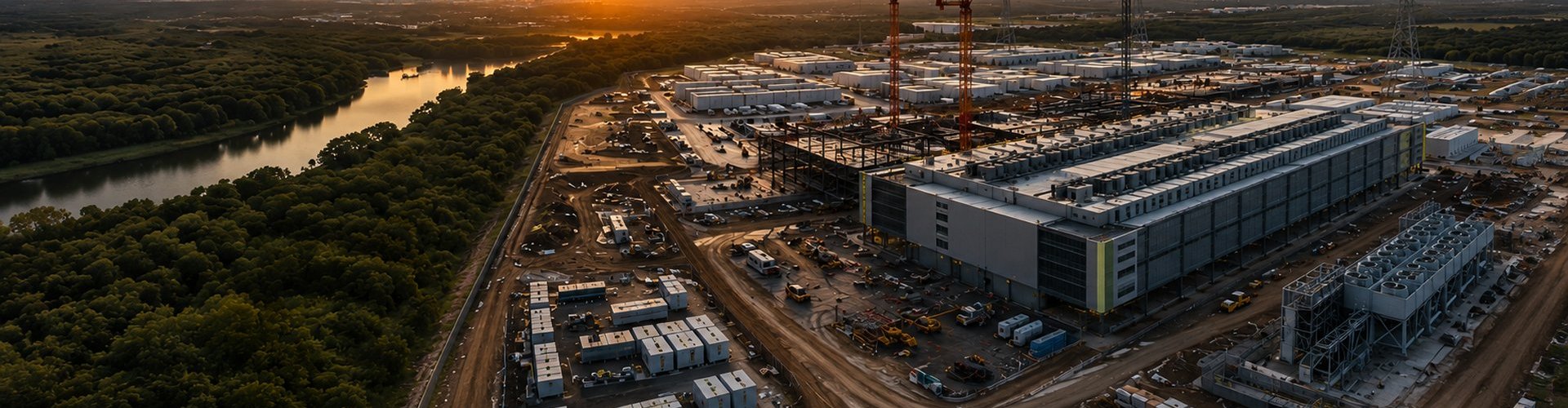
Horizon operates from Sabey Data Centers' SDC Austin campus at 1300 Louis Henna Boulevard in Round Rock, Texas. The Sabey campus operates on the former Sears Teleserv site that Sabey demolished and redeveloped beginning in 2022. SDC Austin Building A (213,000 square feet, completed fall 2024) hosts Horizon plus broader Sabey customer base. SDC Austin Building B (Austin B, 3-story facility designed for 54 MW critical capacity, broke ground mid-2025, first 18 MW targeted for Q3 2027) extends the campus capacity supporting additional high-density compute, AI workloads, plus broader hyperscale operator deployment. Combined SDC Austin full buildout positions the campus at approximately 84-85 MW critical capacity across approximately 430,000 square feet — purpose-built for high-density deployments including AI and supercomputing applications with low-cost renewable power.
The Sabey SDC Austin substrate's specific structural advantages combine integrated liquid and air cooling infrastructure (purpose-designed to support high-density supercomputing requirements that traditional commercial colocation typically does not accommodate at comparable scale), low-cost renewable power sourcing, plus integration with the broader Round Rock operator concentration substrate. The Round Rock substrate combines proximity to UT Austin's main campus (~30 miles south), Dell Technologies' global headquarters (immediately adjacent at 600 Louis Henna Boulevard area), the broader Williamson County operator concentration, plus integration with the Austin metro AI compute substrate. Combined positioning establishes the Sabey-Horizon-TACC partnership as one of the most distinctive US academic-and-commercial data center deployments.
Capital and System Architecture
The Horizon capital framework operates across multiple coordinated tiers. The $457 million NSF allocation to UT Austin establishes the foundational system capital, supporting Horizon hardware procurement, deployment, plus broader LCCF operational substrate. Sabey's separate capital investment in SDC Austin includes approximately $185 million in real property improvements plus approximately $5 million in equipment for the Building A substrate, plus the broader Building B construction capital. The combined NSF allocation plus Sabey commercial capital plus broader UT Austin LCCF operational coordination establishes the multi-decade execution framework supporting Horizon's operations through the broader LCCF program lifetime.
The Horizon system architecture combines traditional 64-bit HPC compute with specialized AI accelerators. The HPC component delivers approximately 400 petaflops of traditional simulation performance — a 10x improvement over Frontera, the current TACC leadership system. The AI component delivers approximately 100x Frontera-equivalent AI performance through GPU acceleration tailored for AI workloads. Combined system performance positions Horizon to support traditional simulation-based scientific research (physics, climate science, medicine, energy, broader scientific domains) plus advanced AI research at scales unprecedented in US academic computing infrastructure. The lower-precision GPU AI accelerators offer substantial power-savings advantages compared to traditional HPC CPU architectures — a structurally distinctive advantage given the broader Texas grid capacity coordination question (covered at ERCOT Energy Sovereignty).
Research Focus and User Base
Horizon supports US researcher access across multiple structural scientific categories. Traditional HPC simulation domains include physics, climate science, weather forecasting, medicine, energy systems modeling, materials science, computational chemistry, plus broader scientific computing requirements spanning picosecond-scale atomic processes through gigayear-scale cosmological simulations. AI research domains include foundation model training, scientific AI research, AI-augmented simulation methodologies, plus broader AI methodology research at scales unprecedented in US academic computing infrastructure. The combined HPC plus AI research substrate positions Horizon as one of the most versatile US academic computing systems supporting the broader US-and-international research community.
The user base spans the broader US academic research community plus international research partnerships through the NSF LCCF framework. The LCCF distributes operational coordination across four science centers nationwide, leveraging deep expertise within the US cyberinfrastructure ecosystem. TACC's existing user community spans more than 100,000 students and researchers across prior systems including Frontera plus broader TACC infrastructure; Horizon substantially expands TACC's research capacity supporting user community scaling. Workforce training opportunities operate through partnerships including Morehouse College plus broader K-12 education and outreach services. Combined user base coordination establishes Horizon as the structurally distinctive US academic supercomputing substrate.
Convergence Position within Round Rock Concentration
The Horizon-Sabey deployment operates at a structurally distinctive convergence position within the broader Round Rock data center concentration. Round Rock has emerged as one of the most concentrated Williamson County data center substrates, with three major operator concentrations plus broader prospective operator scaling. Sabey Data Centers' SDC Austin campus (84-85 MW at full buildout, hosting Horizon) represents the academic-and-research-anchored substrate. Switch's "The Rock" campus at 300 Dell Way (1.5+ million square feet of Tier-5 capacity across 36.76 acres rezoned 2021 plus 32.48 acres rezoned 2023) represents the hyperscale-and-enterprise commercial substrate. Switch's just-announced second Round Rock data center (project filing released May 6, 2026, construction targeting June 2026 commencement plus mid-2028 completion) extends the Switch substrate scaling. Skybox's planned 75 MW Round Rock data center on 29.69 acres at East Old Settlers Boulevard and A.W. Grimes Boulevard (Round Rock City Council approved February 12, 2026) represents a third major operator deployment.
The combined Round Rock concentration substantially exceeds 2 million square feet of operational and committed data center capacity at full buildout — establishing Round Rock as one of the most concentrated emerging US data center substrates within a single municipality. Adjacent committed substrate includes the Amazon PUD-approved development near CR 172 and SH 45 (placeholder pending construction submission) plus the 57-acre Chisholm Parkway and I-35 development approved 2024. Combined Round Rock concentration positions the city as the structurally distinctive emerging US data center substrate with the most diverse operator-and-customer mix (academic supercomputing via Sabey-Horizon, hyperscale Tier-5 via Switch, broader hyperscale via Skybox, broader prospective via Amazon and other operators).
The convergence with the broader Williamson County concentration plus the Austin-San Antonio data center corridor operates through multiple pathways. Williamson County's broader data center concentration (Skybox/Prologis Hutto's $10 billion-plus 600 MW PowerCampus Austin substrate, Meta's Temple campus, Blueprint's Georgetown $160 million substrate, broader operator concentration) plus the Austin-San Antonio corridor's broader 7,823 MW planned capacity (per Cushman & Wakefield March 2026) positions the broader regional substrate as one of the most rapidly-scaling US data center buildouts.
Strategic Framing
The broader strategic framing positions Horizon at the convergence of multiple structural narratives. The NSF Leadership-Class Computing Facility framework establishes Horizon as the structurally distinctive US academic supercomputing substrate supporting US scientific research competitiveness. The Sabey commercial data center substrate establishes the operational framework supporting high-density supercomputing requirements that on-campus academic housing cannot accommodate at comparable scale. The Round Rock municipal substrate establishes the local-and-state-level coordination supporting the broader operator-and-academic deployment.
Outlook
Horizon represents one of the most structurally significant emerging US academic supercomputing operations. The combination of $457 million NSF allocation, the 400 petaflops HPC performance plus 100x Frontera AI performance, the strategic deployment at Sabey Data Centers' SDC Austin campus in Round Rock, the structurally distinctive Dell + NVIDIA + VAST Data + Sabey + TACC partnership, plus the integration with the broader Round Rock data center concentration positions Horizon as one of the structurally distinctive US academic-and-commercial computing operations.
The outlook depends on multi-dimensional execution across Spring 2026 production phase commencement, user community scaling, NSF LCCF program coordination, Sabey Building B operational scaling, plus integration with the broader Round Rock concentration. Even partial execution at the announced framework would represent the structurally distinctive US academic supercomputing operation at scale. Full execution at announced scale would position Horizon as the largest US academic supercomputing system supporting US scientific research competitiveness plus AI methodology research through the multi-decade operational lifetime.
Related Coverage
Dell Round Rock Headquarters | Austin Data Centers