AustinIO > The Texas Nexus > Golden Dome Texas Corridor > Allen Control Systems
Allen Control Systems
Autonomous Counter-Drone Weapon Systems from Austin
Allen Control Systems (ACS) is a defense technology company headquartered at 510 East Saint Elmo Road in Austin that builds Bullfrog, an AI-powered autonomous weapon station that turns legacy machine guns into drone killers at a cost-per-engagement as low as $10 per shot — against targets that currently require six-figure missiles to defeat. Founded in 2022 by Mike Wior (CEO), Steven Simoni (President), and Luke Allen (CTO), ACS went from seed round to $2.2 billion valuation in under two years, with Bullfrog already fielded by the U.S. Army and Navy and sold to South Korea, the United Arab Emirates, and Romania. Total funding: $242 million across three rounds. The company tripled its Austin manufacturing footprint to 57,000 square feet in February 2026 and maintains additional offices in Alexandria, Virginia, and Huntsville, Alabama.
ACS is a product of the Austin defense-tech ecosystem that Capital Factory's Center for Dual-Use Innovation seeded. The company's trajectory — from founding to billion-dollar valuation to fielded operational deployment across three continents in under four years — is the fastest defense-tech scaling in the Austin cluster alongside Saronic Technologies.
Founding and Leadership
CEO Mike Wior and President Steven Simoni are both former Navy nuclear reactor engineers. Simoni previously founded Bbot, a robotics and software restaurant technology company that DoorDash acquired for over $100 million in 2022 — the exit that provided both operational experience at scale and the capital base to launch ACS. CTO Luke Allen rounds out the founding team with deep hardware engineering expertise. The company was incorporated in July 2022 in Delaware and federally registered in October 2022.
The thesis is brutally simple: China produces 90% of the world's commercial drones. Cheap FPV drones can bleed a modern military dry when the only counter is a six-figure interceptor missile. Bullfrog drives the cost-per-kill from hundreds of thousands of dollars down to the cost of a machine gun round — restoring the economics of defense to something a military can sustain against swarm-scale threats. Wior: "Bullfrog was built for fast-moving, close-in drone defense where legacy systems fall short. It restores maneuver to our ground forces which now must operate under ubiquitous aerial threat."
Product Portfolio
Bullfrog is a family of autonomous weapon stations built around a passive electro-optical sensing architecture. The system detects and engages UAS targets using machine vision without emitting radar signals — a meaningful tactical advantage in contested electromagnetic environments where emissions control is a survivability requirement. It detects, tracks, and acquires targets autonomously and waits for a human to authorize the shot. Accuracy: under one MOA (minute of angle).
| Variant | Effector | Effective Range | Primary Target Set | Status |
|---|---|---|---|---|
| Bullfrog / M240 | M240 / M240C machine gun (7.62mm) | ~800 m | Group 1–3 UAS, FPV drones, swarms | Fielded — U.S. Army, Navy, SOF, South Korea, UAE |
| Bullfrog / M2 | M2 .50 caliber | ~800–1,500 m | Group 1–3 UAS, heavier threats | Fielded |
| Bullfrog / M230 | M230 30mm chain gun | 800–1,500 m | Group 2–3 UAS, convoy defense | In development |
| Bullfrog / M134 | M134 minigun | 800–1,500 m | Group 1–2 UAS, swarms, FPV | In development |
ACS also developed FAFOS (Friend and Foe Operating System), a long-range optical drone identification solution launched in October 2025. FAFOS classifies and identifies drones at extended range using passive optical sensing and AI classification — solving the identification problem that sits upstream of the engagement decision. FAFOS operates with on-board autonomy in communications-denied environments and integrates with the orbital data relay (Starlink/Starshield) in connected mode.
The Army Applications Lab selected ACS to integrate Bullfrog across five of its most-deployed vehicle platforms. Bullfrog demonstrated a 100% success rate during the Technology Readiness Experiment 2026 (T-REX 26-1), one of the U.S. Department of Defense's premier counter-drone testing events.
Contracts and Deployments
| Customer | Contract / Status |
|---|---|
| U.S. Army Applications Lab | Integration of Bullfrog across five most-deployed vehicle platforms |
| U.S. Army xTechOverwatch | Winner — top prize in Army's premier emerging tech challenge; $2M Direct to Phase II SBIR award (Feb 2026) |
| U.S. Special Operations Command (SOCOM) | Integration of Bullfrog into critical combat platforms; SOF maritime units (Nov 2025) |
| U.S. Navy | Fielded operational deployment |
| Republic of Korea Armed Forces | Awarded — delivery of Bullfrog autonomous weapon systems, operator training, technical assistance, sustainment (Nov 2025) |
| United Arab Emirates Armed Forces | Awarded — delivery of Bullfrog systems plus support (Nov 2025) |
| Romanian Armed Forces | MOU signed for local co-production of Bullfrog |
ACS opened regional offices in Asia and Europe to support international demand. The SOCOM selection — by special operations forces' maritime units, who operate in some of the most demanding environments in the world — was described by Wior as "a massive vote of confidence for the company and its tech."
Funding and Valuation
| Date | Round | Amount | Post-Money Valuation | Lead Investor |
|---|---|---|---|---|
| Apr 2024 | Seed | $12M | — | — |
| Mar 2025 | Series A | $30M | — | — |
| Jun 2026 | Series B | $200M | $2.2B | Smash Capital |
Total disclosed funding: $242 million across three rounds. The Series B included participation from existing investors Inspired Capital, Craft Ventures, and others. The $200 million Series B is being used to scale manufacturing at the St. Elmo Road facility in Austin and accelerate deployment across U.S. and allied forces, as well as advance development of new product lines beyond the Bullfrog family.
Austin Facility
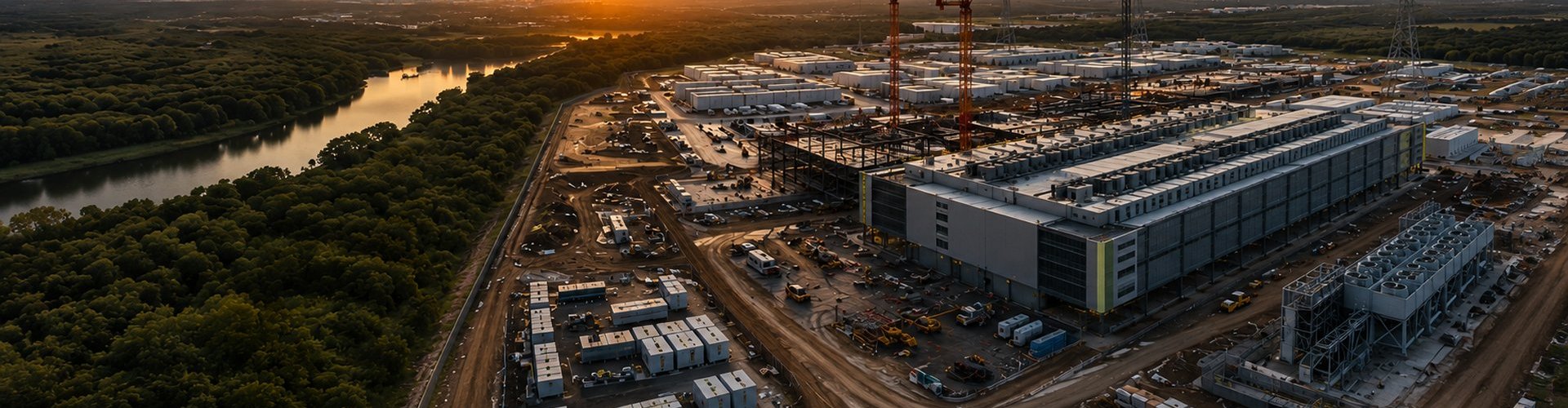
ACS is headquartered at 510 East Saint Elmo Road, Suite A-1, Austin, TX 78745 — in the same South Austin industrial corridor as other defense-tech operators. The company tripled its Austin manufacturing footprint to 57,000 square feet in February 2026 to accommodate Bullfrog production scaling. The facility houses design, engineering, software development, manufacturing, and integration operations under one roof. As of mid-2026, ACS employs approximately 200 people, with significant hiring underway to support the Series B manufacturing ramp.
The Orbital Backbone
Bullfrog and FAFOS are designed for the contested electromagnetic environment where satellite communications may or may not be available. On-board AI compute processes sensor data at the edge using Nvidia processors — no datalink to a ground station required for the engagement decision. In the connected mode, FAFOS integrates with the broader sensor picture distributed through the orbital data relay: SpaceX's Starshield military mesh, the SDA's PWSA tracking constellation, and commercial Starlink. The same orbital backbone that serves Saronic's autonomous surface vessels serves Bullfrog's situational awareness layer.
This is the structural pattern across the Austin defense-tech cluster: autonomous systems that operate independently but become more capable when connected to the orbital sensing and communications layer that Golden Dome is building. The ground system is a customer of the orbital layer. The orbital layer exists to serve the ground system.
Cross-Anchor Position
ACS sits within the Austin defense-tech cluster seeded by Capital Factory's Center for Dual-Use Innovation at 701 Brazos. The company's contract pipeline runs through the same DoD innovation units hosted at CDI: the Army Applications Lab, SOCOM, and the broader Army modernization enterprise that xTechOverwatch represents. The I-35 corridor between Austin and Fort Hood (60 miles north) is where Bullfrog gets tested and fielded against operational Army doctrine — the same Austin-Waco I-35/I-14 Corridor that connects the design node to the deployment node for every autonomous system in the cluster.
The competitive landscape includes DroneShield (Australia), Epirus (directed energy), and Fortem Technologies (net-based kinetic), but ACS's distinctive position is the kinetic round approach — using existing ammunition supply chains rather than requiring new interceptor procurement. The economics are the differentiator: a $10 engagement cost against a $2,000 drone inverts the attacker-defender cost ratio that has defined the drone threat since Ukraine.
Watching Items
Manufacturing ramp at St. Elmo Road determines whether ACS can deliver at the volume the Army Applications Lab integration across five vehicle platforms requires. The M230 (30mm) and M134 (minigun) variants in development extend Bullfrog's engagement envelope to convoy-scale and heavier threats — timeline and testing milestones will determine whether the product family broadens beyond the current M240/M2 variants. International production — the Romania co-production MOU is the first step toward manufacturing outside Austin, with implications for allied sustainment and supply chain structure. New product lines beyond Bullfrog, funded by the Series B, are not yet publicly described. The counter-UAS market is moving fast, and ACS's position depends on maintaining its production-speed and cost-per-engagement advantages as well-resourced competitors (Raytheon, L3Harris, Northrop Grumman) enter the autonomous kinetic C-UAS space with their own platforms.
Related Coverage
Saronic Technologies | Lockheed Martin Fort Worth | Austin Aerospace & Defense Ecosystem | Capital Factory in Austin