AustinIO > The Texas Nexus > Golden Dome Texas Corridor > Saronic Technologies
Saronic Technologies
Autonomous Surface Vessels and the Port Alpha Shipyard
Saronic Technologies is a defense technology company headquartered in Austin that designs, manufactures, and deploys autonomous surface vessels at scale for the U.S. Navy and allied maritime forces. Founded in September 2022 by Dino Mavrookas (CEO), Vibhav Altekar (CTO), Doug Lambert (COO), and Rob Lehman (CCO), the company reached a $9.25 billion valuation in under four years — one of the fastest ascents in US defense-tech history. Saronic has raised $2.58 billion across five funding rounds, employs approximately 1,100 people, and in July 2026 selected Brownsville, Texas, as the site of Port Alpha, a $3.2 billion autonomous shipyard that state and local officials are calling one of the largest economic development projects in modern Texas history.
What makes Saronic distinctive at the Texas Nexus level is the combination of Austin-based design and software development, South Texas manufacturing at scale, operational deployment in contested maritime environments, and direct integration into the orbital data relay backbone that connects autonomous surface systems to the broader Golden Dome missile defense architecture. The company is a Capital Factory Texas Fund I portfolio company and emerged from the Austin defense-tech ecosystem that Capital Factory's Center for Dual-Use Innovation seeded.
Founding and Leadership
CEO Dino Mavrookas established Saronic in March 2022 after 11 years in the Navy — including service with SEAL Team 2 and Naval Special Warfare Development Group — followed by an MBA from Wharton and five years as a software investor at Vista Equity Partners. The founding team combines special operations experience with defense-technology engineering: CTO Vibhav Altekar came from Anduril, where he was an engineering manager focused on perception software for autonomous defense systems (he had previously studied electrical engineering at UC Davis and helped scale Standard Metrics for 8VC). COO Doug Lambert and CCO Rob Lehman round out a founding team with deep Navy and Marine Corps operational backgrounds. Several co-founders came from SEAL Team 6 and the Marine Corps.
The company delivered its first autonomous surface vessel within six months of founding, leveraging the founders' direct connections to Navy operational requirements. Saronic was conceived to address a specific strategic gap: the United States' declining shipbuilding capacity against the rapid expansion of China's navy, in an era where attritable autonomous warfare is redefining maritime doctrine.
Vessel Portfolio
Saronic builds a graduated family of autonomous surface vessels unified by a shared autonomy software stack and modular open systems architecture. All vessels operate with on-board AI compute (Nvidia edge processors) for autonomous navigation, target identification, and tracking in GPS-denied and communications-contested environments. As of August 2026, the company's active vessel catalog displays three primary platforms:
| Vessel | Length | Key Specifications | Mission Profile |
|---|---|---|---|
| Corsair | 24 ft (7.3 m) | 1,000+ nm range, 35+ knot top speed, 1,000 lb payload capacity, diesel-powered, 50+ days autonomous loiter, 92+ continuous hours underway | Surveillance, targeting, electronic warfare, loitering munitions launch. Under $392M Navy production contract (Dec 2025). Fleet has logged 79,000+ nm and 15,000+ operating hours. Prototype-to-high-rate-production in under one year |
| Mirage | 40 ft (12 m) | 35+ knot speed, modular open architecture, scalable payload | Multi-mission military and commercial applications, logistics, harbor operations. Dual-use design for government and commercial customers |
| Marauder | 180 ft (55 m) | 5,400 nm range, 25+ knot speed, 150 metric ton payload capacity | Medium unmanned surface vessel — tactical deployment, cargo, expeditionary logistics. Currently under construction at Gulf Craft facility in Franklin, Louisiana |
Earlier vessel classes — the six-foot Spyglass and 14-foot Cutlass — appeared in prior catalogs but are no longer displayed on the company's public product page as of August 2026. Saronic has also been selected for DARPA's Pulling Guard program under Focus Area 2, designing an autonomy-enabled modular vessel for semi-autonomous escort missions to improve survivability of unarmed logistics vessels.
All vessels share a unified autonomy stack and run on Echelon, Saronic's command-and-control software for planning and executing missions across single vessels or coordinated fleets.
Port Alpha — Brownsville Shipyard
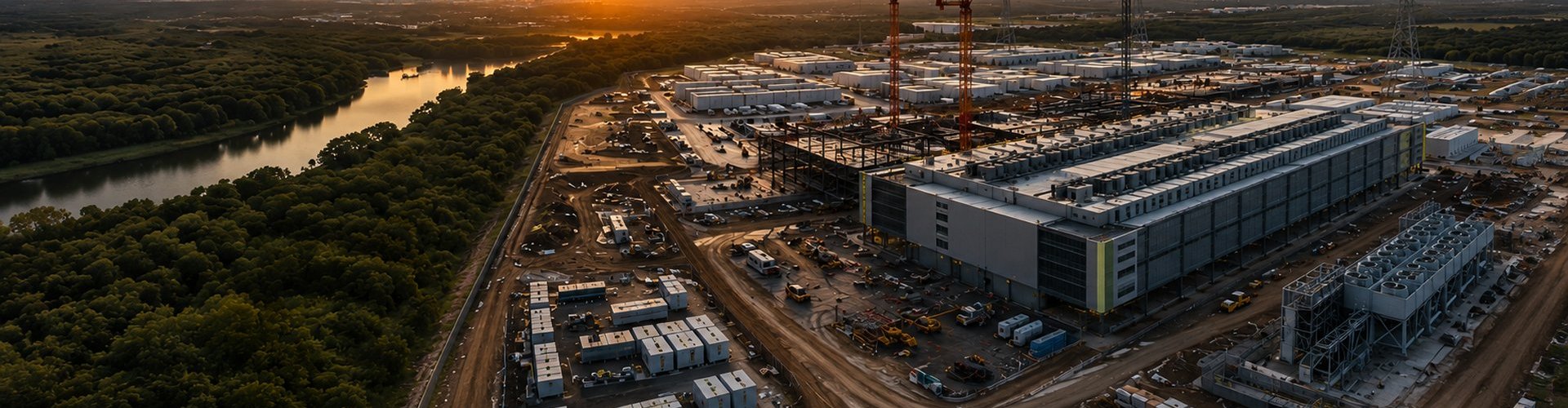
On July 16, 2026, Saronic selected Brownsville, Texas, as the site for Port Alpha, its next-generation autonomous shipyard, following a year-long nationwide search evaluating sites across the East, West, and Gulf Coasts. Brownsville was selected after rigorous review of workforce availability, infrastructure readiness, land scale, logistics, and expansion potential.
| Specification | Detail |
|---|---|
| Capital investment | $3.2 billion |
| Initial footprint | 835 acres at the Port of Brownsville |
| Full build-out potential | Nearly 4,400 acres |
| Construction start | 2026 |
| Operations target | 2028 |
| Initial vessel capacity | Vessels up to 850 ft |
| Future expansion capacity | Vessels exceeding 1,200 ft |
| Direct jobs | Up to 10,000 over a decade ($750M annual payroll) |
| Regional economic impact (Cameron County) | $160 billion projected |
| State economic impact (Texas) | $264.5 billion projected |
| Tax abatement | 95% over 20 years approved by Cameron County ($211M value) |
The Port of Brownsville is the only deepwater seaport located directly on the U.S.-Mexico border, encompassing approximately 40,000 acres — the country's largest land-owning public port authority. Port Alpha provides hundreds of acres of waterfront access, deepwater ship channel connectivity, established multimodal transportation infrastructure, and proximity to a growing skilled workforce.
In July 2026, Saronic announced a partnership with Samsung Heavy Industries to advance autonomous shipbuilding at Port Alpha. Samsung Heavy Industries Vice Chairman and CEO Sung An Choi said the partnership combines complementary strengths in shipbuilding and maritime autonomy. The Samsung partnership extends the broader Samsung–Texas relationship already established through Samsung's semiconductor fabrication at Taylor (Williamson County).
The geographic parallel is exact: Austin design → South Texas manufacturing, the same Texas Triangle pattern as Tesla Giga Texas → SpaceX Starbase. Port Alpha and Starbase share the same Cameron County / South Texas coast, connected to Austin by the same I-35/US 77 corridor.
Funding and Valuation
Total disclosed funding is currently $2.58 billion across five rounds. Key recurring investors include Andreessen Horowitz, 8VC, Caffeinated Capital, and Elad Gil. The Series D participants also included Advent International, Bessemer Venture Partners, DFJ Growth, IMM Investment, BAM Elevate, Franklin Templeton, and Silent Ventures. At full Corsair manufacturing capacity of 600 boats annually across all lines, Saronic estimates potential revenue of $480 million with 45% gross margins. Saronic also acquired Gulf Craft, a Louisiana-based shipbuilder, to accelerate production capacity for the Marauder program.
Operational Deployment
Saronic vessels have moved beyond testing into operational deployment. The company's Corsair fleet executed a rescue of an Iranian helicopter crew in the Strait of Hormuz — the first high-profile real-world humanitarian deployment of unmanned surface vessels in a contested maritime environment. Corsair vessels have logged more than 79,000 nautical miles and over 15,000 operating hours across 2025, operating six days a week, including a validated week-long deployment of eight vessels operating more than 70 nautical miles offshore totaling over 4,500 nautical miles with five-day continuous autonomous loiter.
The Orbital Backbone
Every Saronic vessel operates with on-board autonomy for the GPS-denied, comms-denied environment — that is the baseline design requirement. In the connected mode, they are customers of the same orbital infrastructure that the Golden Dome Texas Corridor depends on: SpaceX's Starshield military mesh ($2.29 billion Space Data Network contract), the Space Development Agency's PWSA tracking constellation (300+ satellites across three tranches), and commercial Starlink for baseline connectivity. Over-the-horizon communications for Corsair vessels operating in the Strait of Hormuz route through the same Starlink/Starshield constellation that Golden Dome's tracking satellites feed into.
The autonomous surface layer and the orbital defense layer are not parallel programs — they are the same kill chain. The AI battle management software — built by Palantir and Anduril in Austin — closes the loop between the orbital sensor picture and the autonomous system on the surface. The chips that make all of it work are certified at the Texas A&M Cyclotron Institute in College Station.
Cross-Anchor Position
Saronic's Texas footprint mirrors the Giga Texas → Starbase pattern at the structural level. Austin headquarters for design, software, and engineering at 510 East Saint Elmo Road. Port Alpha at the Port of Brownsville for volume manufacturing. The same I-35/US 77 corridor connecting the two. The same South Texas coast as SpaceX Starbase, with the same deepwater port infrastructure and the same Cameron County economic development framework (Cameron County approved a 95% tax abatement over 20 years for Saronic, worth $211 million).
The Capital Factory connection is direct — Saronic is a Texas Fund I portfolio company backed through the Center for Dual-Use Innovation ecosystem at 701 Brazos in downtown Austin. The Austin defense-tech cluster that CDI seeded — Saronic, Allen Control Systems, Anduril, Palantir, Shield AI — represents the autonomous systems layer that gets tested and fielded at Fort Hood along the Austin-Waco I-35/I-14 Corridor. The Samsung Heavy Industries partnership at Port Alpha extends the Samsung–Texas relationship already anchored at Samsung Taylor in Williamson County.
The Northrop Grumman relationship (through the broader PWSA constellation program) and the Navy's $392 million Corsair production contract position Saronic within the same defense-industrial network mapped at the Golden Dome Texas Corridor page. Saronic is not a Golden Dome prime — it builds the autonomous surface platform that consumes Golden Dome's orbital output.
Watching Items
Port Alpha construction beginning in late 2026 is the highest-impact near-term milestone — converting the $3.2 billion commitment from announcement to physical infrastructure. Marauder completion at Gulf Craft in Franklin, Louisiana, validates the large-vessel production capability that Port Alpha will scale. Corsair high-rate production ramp determines whether Saronic can deliver against the $392 million Navy contract at the volume the autonomous maritime doctrine requires. The Samsung Heavy Industries partnership's operational form — what Samsung contributes beyond the MOU — will define whether Port Alpha builds at Samsung's shipbuilding tempo or at startup speed. DARPA Pulling Guard program execution tests Saronic's ability to extend the platform into semi-autonomous escort missions for unarmed logistics vessels. IPO timing — multiple sources project near-term public offering readiness at a $24+ billion valuation — would mark the largest defense-tech IPO from the Austin ecosystem.
Related Coverage
Allen Control Systems | Lockheed Martin Fort Worth | Capital Factory in Austin | Austin Aerospace & Defense Ecosystem