AustinIO > The Texas Nexus > Texas Triangle Cluster > Austin Metro B2B Directory > SkyWater Fab 25
SkyWater Fab 25
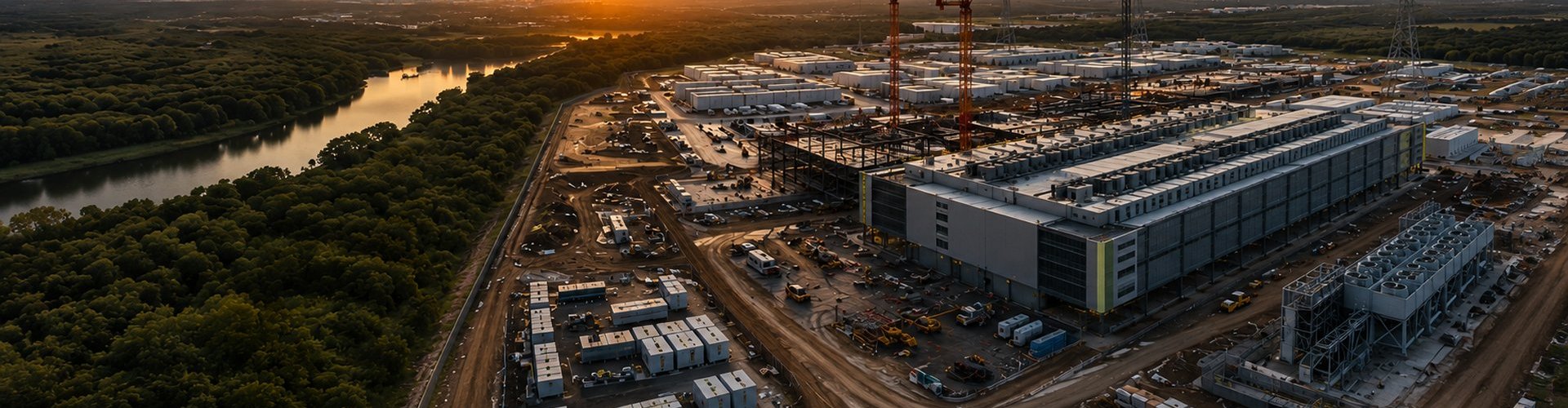
SkyWater Fab 25 is the only DMEA Category 1A Trusted Foundry in Texas — a 1.2 million square foot semiconductor manufacturing facility at 5204 East Ben White Blvd in Austin, producing approximately one billion chips per year across 200mm wafers at process nodes from 130nm to 65nm. SkyWater Technology acquired the fab from Infineon Technologies on June 30, 2025, converting what had been a captive integrated device manufacturer facility into an open-access pure-play foundry. IonQ (NYSE: IONQ) completed its acquisition of SkyWater on July 31, 2026 for $1.8 billion in cash and stock, making Fab 25 part of the first vertically integrated full-stack quantum platform company. SkyWater continues to operate as a wholly owned subsidiary under its own name, led by CEO Thomas Sonderman.
The facility adds approximately 400,000 wafer starts per year to SkyWater's exclusively US-based foundry capacity, making the combined operation the largest US-based pure-play foundry. Fab 25's proven capabilities — copper back-end-of-line interconnects, 65nm node infrastructure, and high-voltage Bipolar-CMOS-DMOS (BCD) technology — serve the foundational chip categories that defense satellites, automotive controllers, industrial sensors, and power management systems depend on. These are not leading-edge logic nodes. They are the nodes where the chips that run physical infrastructure get made — and where nearly all of them currently come from offshore foundries in Taiwan, South Korea, and China.
Fab Lineage
Fab 25 has been manufacturing silicon continuously since AMD built it in 1992 as part of its Austin campus expansion. The facility produced AMD K6 and Athlon processors through the late 1990s, then transitioned to flash memory production when AMD and Fujitsu formed Spansion as a joint venture in 2003. Spansion operated Fab 25 as its flagship manufacturing plant, converting the facility to 200mm 110nm flash production. Cypress Semiconductor acquired Spansion in 2015 and consolidated wafer production at the Austin site. Infineon merged with Cypress in 2020 and operated Fab 25 as its US automotive and industrial chip fabrication plant, employing approximately 960 workers and investing $83 million in equipment and facility upgrades before the SkyWater transaction.
The ownership chain — AMD (1992) → Spansion (2003) → Cypress Semiconductor (2015) → Infineon (2020) → SkyWater (2025) → IonQ subsidiary (2026) — represents the longest continuous fabrication lineage at a single Austin site. Each transition preserved the workforce and the manufacturing knowledge embedded in it. SkyWater retained all approximately 1,000 Fab 25 employees. Infineon retained a long-term supply agreement ensuring continued high-volume production at the site and a US manufacturing footprint for its automotive and industrial customers.
Trusted Foundry — What That Means
SkyWater is a DMEA Category 1A Trusted Supplier — the highest level of accreditation the Defense Microelectronics Activity of the US Department of Defense grants for semiconductor manufacturing. Category 1A accreditation requires rigorous evaluation of personnel integrity, facility security, process control, and supply chain traceability across design, fabrication, and distribution of national security components. SkyWater's Minnesota wafer fab achieved Category 1A status in 2010 (re-accredited at SkyWater's founding in 2017), its Florida advanced packaging facility achieved it in May 2024, and Fab 25 operates under the same corporate accreditation umbrella. All SkyWater operations are Trusted.
The practical consequence: Fab 25 can fabricate wafers for classified and export-controlled programs that cannot use offshore foundries. The Trusted Foundry program exists because the overwhelming majority of global semiconductor fabrication capacity — including all leading-edge logic production — is located in Taiwan, South Korea, Japan, and China. For chips that go into satellites, interceptors, nuclear command-and-control systems, and intelligence platforms, the US government requires domestic fabrication at accredited facilities. Fewer than 10 domestic fabs hold Category 1A accreditation. Fab 25 is the only one in Texas.
The other domestic Trusted Foundries operating at comparable scale:
| Facility | Location | Node Range | Primary Defense Role |
|---|---|---|---|
| SkyWater Minnesota | Bloomington, MN | 90nm–130nm (200mm) | RH90 rad-hard FDSOI platform, mixed-signal CMOS, ROICs. DOD invested up to $170M for strategic rad-hard development |
| SkyWater Fab 25 | Austin, TX | 65nm–130nm (200mm) | Foundational chips for defense, automotive, industrial. Volume capacity (400K wafer starts/year). Open-access foundry model |
| SkyWater Florida | Kissimmee, FL | Advanced packaging | Heterogeneous integration, advanced packaging for defense and quantum applications. Category 1A since May 2024 |
| Honeywell | Plymouth, MN | 150nm SOI (150mm) | Rad-hard SOI CMOS processors and memory for strategic defense and space |
| Microchip Technology | Colorado Springs, CO; Chandler, AZ | Various (200mm) | Rad-hard FPGAs, mixed-signal, power management for space and defense |
| GlobalFoundries | Burlington, VT; Malta, NY | 12nm–180nm (200mm and 300mm) | Secure production for defense and intelligence ASICs. Largest domestic Trusted Foundry by wafer volume |
Golden Dome and the Rad-Hard Pipeline
Fab 25's defense function sits at the intersection of two supply chains that Golden Dome collapses into one program. The first is the rad-tolerant pipeline: hundreds of commercial chip types — processors, memory, sensor front-ends, communication ASICs, power management ICs — designed for automotive or industrial markets, fabricated at volume, then characterized against the orbital radiation environment at Texas A&M's Cyclotron Institute before they can fly on SDA tracking satellites, Starshield relay satellites, or AI1 orbital compute nodes. Fab 25 is where many of those chips get made. The second is the rad-hard pipeline: chips designed from the ground up to survive both chronic space radiation and prompt nuclear weapon effects, fabricated on SkyWater's RH90 platform at the Minnesota facility using FDSOI processes engineered to exceed one Mrad total ionizing dose tolerance.
SkyWater's RH90 platform — a 90nm fully depleted silicon-on-insulator CMOS process based on MIT Lincoln Laboratory technology — is the only US Trusted Foundry 90nm rad-hard-by-process solution. The Department of Defense has invested up to $170 million since 2019 to advance RH90 toward full qualification for strategic defense and space applications, including a $27 million Other Transactional Agreement option awarded in 2022. RH90 features seven metal layers (five copper, two aluminum), low-power SRAM, metal-insulator-metal capacitors, and precision resistors — the building blocks for rad-hard ASICs, read-out integrated circuits, and embedded FPGAs that go into kill vehicle guidance electronics, nuclear command-and-control, and deep-space mission computers.
The two pipelines converge physically in Texas. Rad-hard chips designed for the RH90 platform at the Minnesota facility and rad-tolerant chips fabricated at Fab 25 in Austin both pass through the Cyclotron Institute in College Station for heavy-ion single-event-effects qualification — the beam-line gate that every chip must clear before it can fly.
The Texas Triangle Supply Chain Position
Fab 25 is the fabrication node in a supply chain that runs physically continuous across the Texas Triangle from chip design to orbital deployment:
| Supply Chain Step | Operator | Location |
|---|---|---|
| Rad-hard analog chip design | Texas Instruments | Dallas |
| Trusted photomask fabrication | Photronics Texas | Allen (DFW) |
| Trusted Foundry wafer fabrication | SkyWater Fab 25 | Austin (Ben White Blvd) |
| Radiation certification | Texas A&M Cyclotron Institute | College Station |
| Sensor and EW system integration | BAE Systems | Austin (Parmer) |
| Interceptor manufacturing | Lockheed Martin Missiles and Fire Control | Grand Prairie (DFW) |
| Spacecraft bus manufacturing | Intuitive Machines / Lanteris | Houston |
| AI battle management software | Palantir, Anduril | Austin (South Congress) |
| Launch | SpaceX Starbase | Boca Chica (Cameron County) |
Before SkyWater acquired Fab 25, this supply chain had a gap at step three. Texas had chip designers (TI in Dallas), photomask makers (Photronics in Allen), radiation certifiers (TAMU in College Station), system integrators (BAE, Lockheed, L3Harris across DFW and Austin), and a launch site (SpaceX at Boca Chica) — but no Trusted Foundry wafer fabrication inside the corridor. Chips designed in Dallas and certified in College Station were fabricated offshore or at domestic fabs in Minnesota, Vermont, or Arizona. SkyWater's acquisition closed that gap. The Texas Triangle now has a physically continuous Trusted semiconductor supply chain from design through launch within a single state.
IonQ Acquisition and the Quantum Dimension
IonQ announced its definitive agreement to acquire SkyWater on January 26, 2026 and completed the $1.8 billion transaction on July 31, 2026 after receiving all required regulatory approvals. SkyWater shareholders received $15.00 in cash and 0.4883 shares of IonQ common stock per share. The deal creates what IonQ describes as the only vertically integrated full-stack quantum platform company — owning design, wafer fabrication, advanced packaging, and system-level deployment of trapped-ion quantum processors under one corporate structure.
For Fab 25, the IonQ acquisition adds a third demand layer beyond defense and commercial foundry production. IonQ's roadmap calls for testing 200,000-qubit quantum processing units by 2028, enabling over 8,000 high-fidelity logical qubits, on a path toward a two million-qubit system. Manufacturing those QPUs requires the kind of specialty process capabilities — superconducting interconnects, precision analog, heterogeneous integration — that SkyWater's facilities already provide. SkyWater's Minnesota fab has fabricated superconducting ICs and Josephson junctions; Fab 25's copper BEOL and BCD capabilities extend the platform's capacity for mixed-signal and power management components that quantum systems require at scale.
The defense and commercial foundry business continues unchanged. SkyWater's Trusted Foundry accreditation, its Infineon supply agreement ($300 million in annual revenue), and its open-access foundry model for industrial and automotive customers all carry forward under the subsidiary structure. IonQ Chairman and CEO Niccolo de Masi stated that SkyWater will continue to serve a full range of customers as a US-based semiconductor foundry.
Facility and Capacity
| Attribute | Detail |
|---|---|
| Address | 5204 East Ben White Blvd, Austin, TX 78741 |
| Site | 56 acres |
| Building | 1,223,338 sq ft semiconductor manufacturing and fab facility |
| Wafer size | 200mm (8-inch) |
| Process nodes | 130nm to 65nm |
| Capacity | ~400,000 wafer starts per year |
| Annual output | ~1 billion semiconductor chips |
| Employees | ~1,000 (all former Infineon staff retained) |
| Key capabilities | Copper BEOL interconnects, 65nm node infrastructure, high-voltage BCD, embedded flash, mixed-signal CMOS |
| Accreditation | DMEA Category 1A Trusted Supplier (all SkyWater operations) |
| Replacement cost | >$1.2 billion (per Cushman & Wakefield) |
| Continuous fabrication | Since 1992 (34 years) |
Infineon invested $83 million in equipment and facility upgrades before the handover — $45.5 million in new tools and $37.9 million in facility improvements — ensuring the fab was fully operational at transfer. SkyWater has signaled additional investment to transition the facility from its legacy IDM configuration to an open-access foundry model, enabling a broader customer base to access domestic 200mm capacity at foundational nodes.
Market Position — Foundational Nodes and Domestic Capacity
Fab 25 operates at 200mm on process nodes from 130nm to 65nm. These are not the nodes that make headlines — those are TSMC's 3nm and 2nm processes in Taiwan, or Samsung's gate-all-around nodes in Pyeongtaek. The 65nm–130nm range is where the chips that control physical systems get fabricated: automotive engine controllers, industrial sensor interfaces, power management ICs, motor drivers, RF front-ends, and the analog/mixed-signal components that every satellite, missile, vehicle, and power grid depends on. These foundational chips represent more than half of all semiconductor revenue by unit volume and the vast majority of chip types by design count.
The structural problem is geographic concentration. More than 80% of global 200mm foundry capacity is located in Asia. When SkyWater converted Fab 25 from a captive Infineon facility to an open-access foundry, it did not add new capacity to the global supply — it reclassified existing capacity from serving one customer to serving many, and it did so inside a DMEA-accredited domestic security perimeter. That conversion matters more than a capacity expansion would for the defense and critical-infrastructure customer base that cannot source from offshore foundries regardless of price or availability.
SkyWater's Technology as a Service (TaaS) model — where customers co-invest in developing custom process platforms on SkyWater's fab infrastructure — differentiates Fab 25 from a commodity foundry. The model originated at the Minnesota facility and has generated over $320 million in customer-funded capital investment through 2026. Applied to Fab 25's 65nm capabilities and 400,000-wafer annual capacity, TaaS enables defense primes, automotive Tier 1 suppliers, and quantum hardware companies to develop differentiated process technology on domestic soil without building their own fabs.
Related Coverage
Austin Semiconductor Ecosystem | Top 10 Semiconductor Operators in Austin | Austin Aerospace & Defense Ecosystem | Austin Advanced Mfg